Time to read: 6 min
Low-Pressure Die Casting: Process, Benefits, and Design Guide
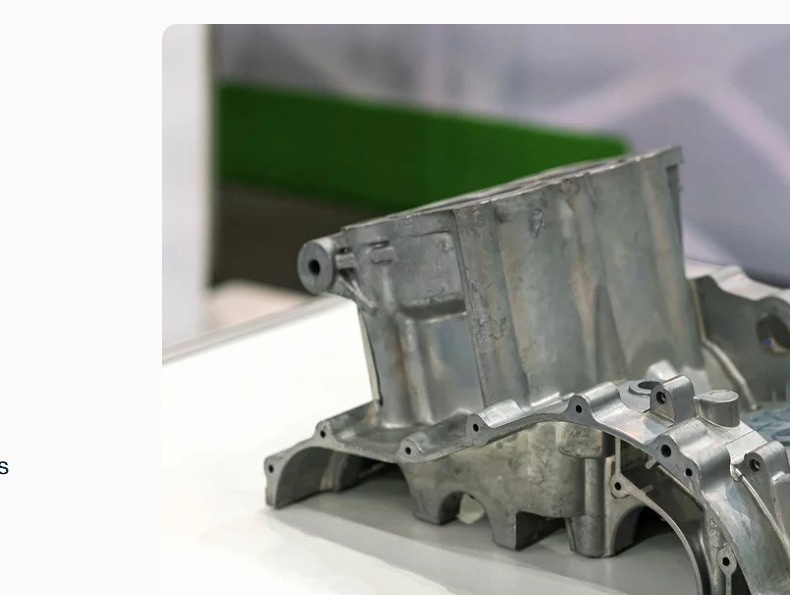
Low-pressure die casting is a controlled metal casting process commonly used for aluminum components that require good mechanical properties, consistent filling, and repeatable production. Unlike gravity casting, the process uses low gas pressure to move molten metal upward into a die. The controlled fill can reduce turbulence and help produce dense parts with stable quality.
This guide explains how low-pressure die casting works, where it is used, and what designers should consider before committing to tooling. RapidMfgPro can help compare die casting with CNC machining, fabrication, and other routes for prototype and production requirements.
How the Low-Pressure Die Casting Process Works
Molten metal is held in a sealed furnace below the die. A riser tube connects the furnace to the mold. When low pressure is applied to the furnace, metal rises through the tube and fills the die from the bottom. Pressure is maintained while the part solidifies. The pressure is then released, unused metal returns to the furnace, and the die opens so the casting can be removed.
Bottom filling and controlled pressure reduce the free-fall and turbulence associated with some gravity processes. This can improve filling of thin sections and reduce oxide entrapment. Cycle time is generally slower than high-pressure die casting, but the process can provide better control for certain structural aluminum parts.
Typical Applications
Low-pressure die casting is widely associated with automotive wheels, but it is also used for housings, structural components, pump bodies, motor parts, suspension elements, and industrial equipment. It is suitable when a component needs a near-net shape, repeatable dimensions, and better material utilization than machining from solid stock.
Applications often involve medium or high production volumes because tooling is required. For low quantities or designs that may change, CNC machining or sand casting may be more economical.
Benefits of Low-Pressure Die Casting
- Controlled filling: metal enters the die at a controlled rate, helping reduce turbulence.
- Good material yield: unused metal can return to the furnace, reducing runner waste.
- Repeatability: permanent tooling supports consistent part geometry.
- Mechanical performance: suitable process control can produce dense aluminum castings.
- Complex near-net shapes: ribs, bosses, cavities, and integrated features can reduce machining.
- Surface quality: permanent molds can provide a more consistent surface than many expendable-mold processes.
Benefits depend on part design, alloy, die temperature, fill profile, venting, and solidification control. A poorly designed casting can still experience porosity, shrinkage, distortion, or incomplete filling.
Design Guidelines
Use Consistent Wall Thickness
Large thickness changes create different cooling rates and increase shrinkage risk. Use gradual transitions and coring to avoid heavy solid sections. Ribs and gussets can add stiffness more efficiently than making the entire wall thicker.
Add Draft for Part Release
Draft angles help the casting release from the die. The required draft depends on alloy, surface, depth, and whether the feature is internal or external. Deep internal walls generally need more draft than shallow external surfaces.
Round Corners and Transitions
Sharp internal corners restrict flow and concentrate stress. Fillets improve metal movement and reduce local hot spots. The radius should be large enough to support casting and tooling without interfering with assembly.
Plan Parting Lines and Ejection
The parting line affects flash, appearance, and secondary operations. Ejector pins may leave small marks, so their locations should avoid sealing and cosmetic surfaces. Undercuts may require slides or cores, increasing tool complexity and maintenance.
Design Machining Allowance Only Where Needed
Bearing seats, gasket surfaces, precision holes, and threaded interfaces may need secondary machining. Add enough stock for cleanup, but avoid machining every surface. The casting should create most of the geometry so the process retains its cost advantage.
Alloys and Material Considerations
Aluminum casting alloys are commonly selected for fluidity, strength, corrosion resistance, heat treatment response, and machinability. The alloy should match the operating load, temperature, environment, finish, and required documentation.
Heat treatment may improve mechanical properties but can also cause distortion. If flatness or position is critical after heat treatment, machining and inspection should be planned afterward. Material certificates and test requirements should be defined in the RFQ.
Tooling and Production Economics
Low-pressure die casting requires a metal die, core system, gating design, and process development. Tool cost depends on part size, complexity, slides, cavities, expected life, and inspection requirements. The economic decision should be based on total expected volume and product life.
For a design that is still changing, machining or prototype casting may be used first. Once geometry and demand are stable, production tooling can reduce unit cost. Tool maintenance, spare inserts, and replacement strategy should be considered for long programs.
Common Defects and How They Are Managed
Potential defects include gas porosity, shrinkage porosity, cold shuts, incomplete fill, oxide inclusions, hot tears, and distortion. Process simulation, controlled die temperature, proper venting, suitable fill pressure, and solidification design help reduce these risks.
Inspection may include visual examination, dimensional measurement, leak testing, X-ray, dye penetrant, mechanical testing, or sectioning depending on the component. Not every part requires every test. The inspection plan should focus on failure modes and critical regions.
Low-Pressure Die Casting vs. Other Processes
High-pressure die casting offers faster cycles and thin walls but may trap more gas, which can affect heat treatment and welding. Gravity permanent mold casting is simpler but provides less control over fill pressure. Sand casting has lower tooling cost and supports large parts but generally has rougher surfaces and wider tolerances. CNC machining offers maximum flexibility for low volume but uses more material and machine time.
The correct process depends on quantity, size, geometry, material performance, tooling budget, and schedule. RapidMfgPro can help buyers compare these factors and identify suppliers for casting, secondary machining, finishing, and inspection.
Need Help Reviewing a Custom Part?
Share your CAD file and requirements to request supplier matching. Supplier capability and commercial terms must be verified before order placement.
Request Supplier Match