Laser Cutting
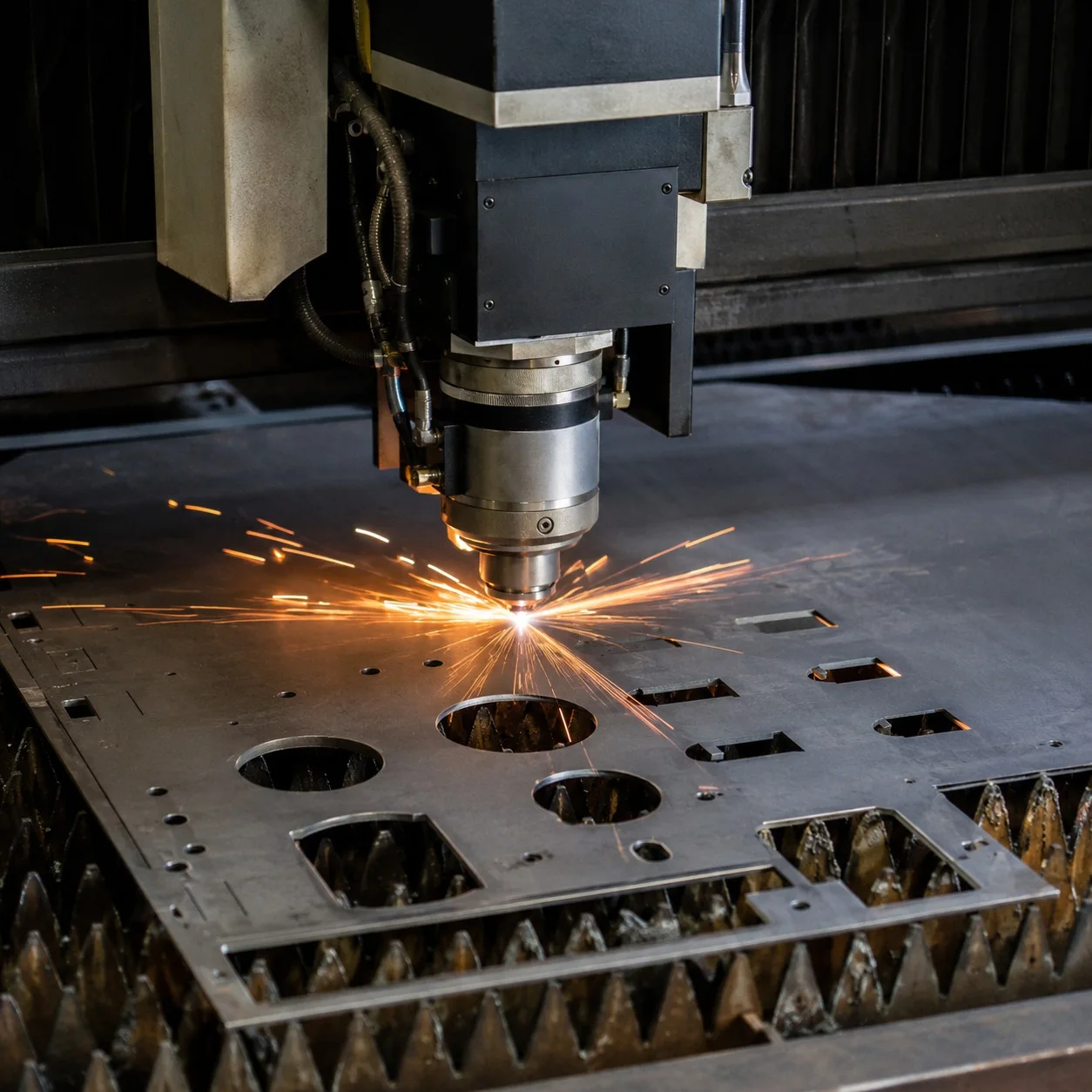
Laser cutting creates flat patterns, slots, tabs, holes, and profiles from sheet stock, providing a flexible starting point for custom sheet metal fabrication.
RapidMfgPro helps buyers compare fabrication routes and identify independent suppliers for laser cutting, bending, welding, hardware insertion, finishing, prototypes, and repeat-production assemblies.
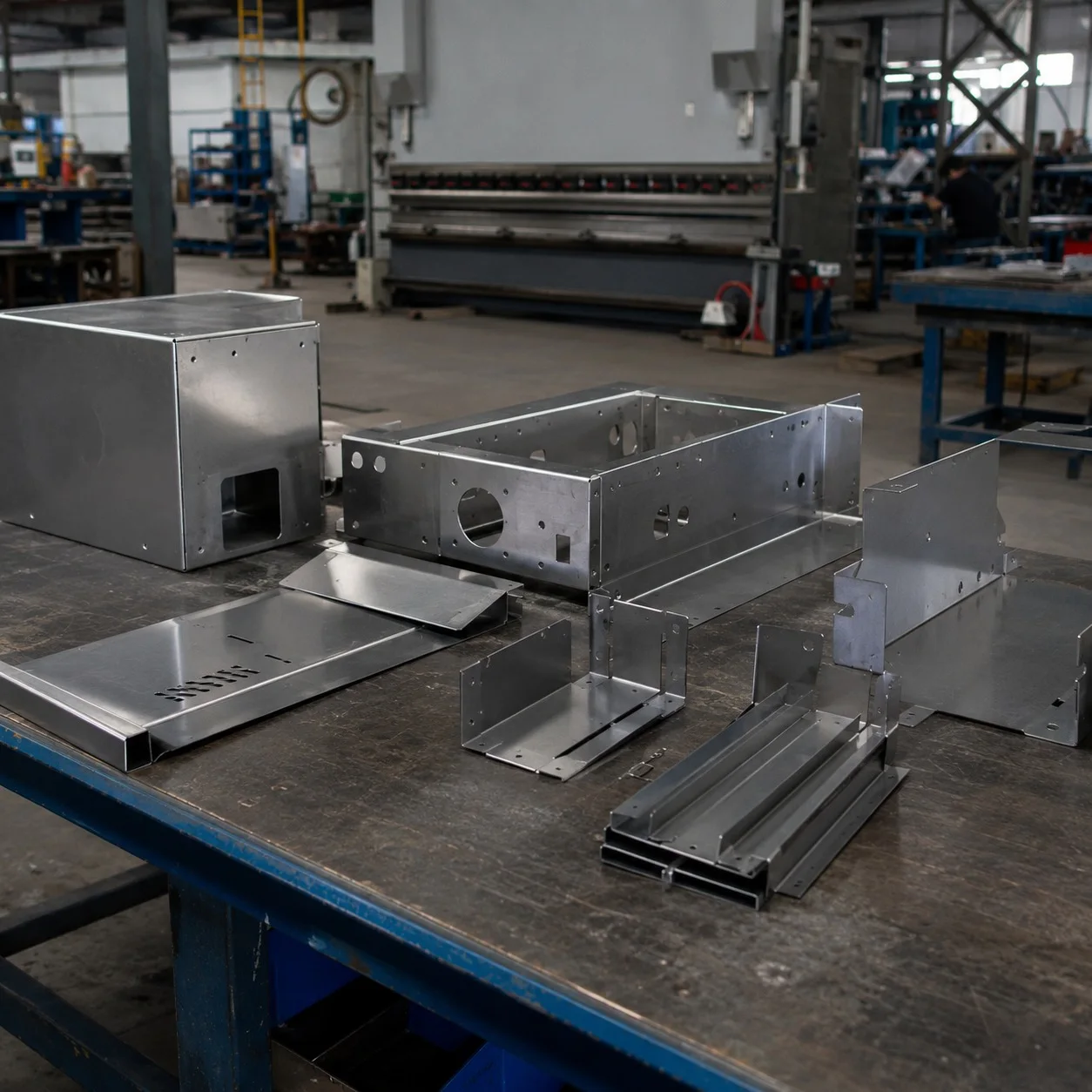
RapidMfgPro helps buyers organize part geometry, material grade, thickness, tolerances, joining requirements, and quantity before comparing sheet metal suppliers.
Laser cutting creates flat patterns, slots, tabs, holes, and profiles from sheet stock, providing a flexible starting point for custom sheet metal fabrication.
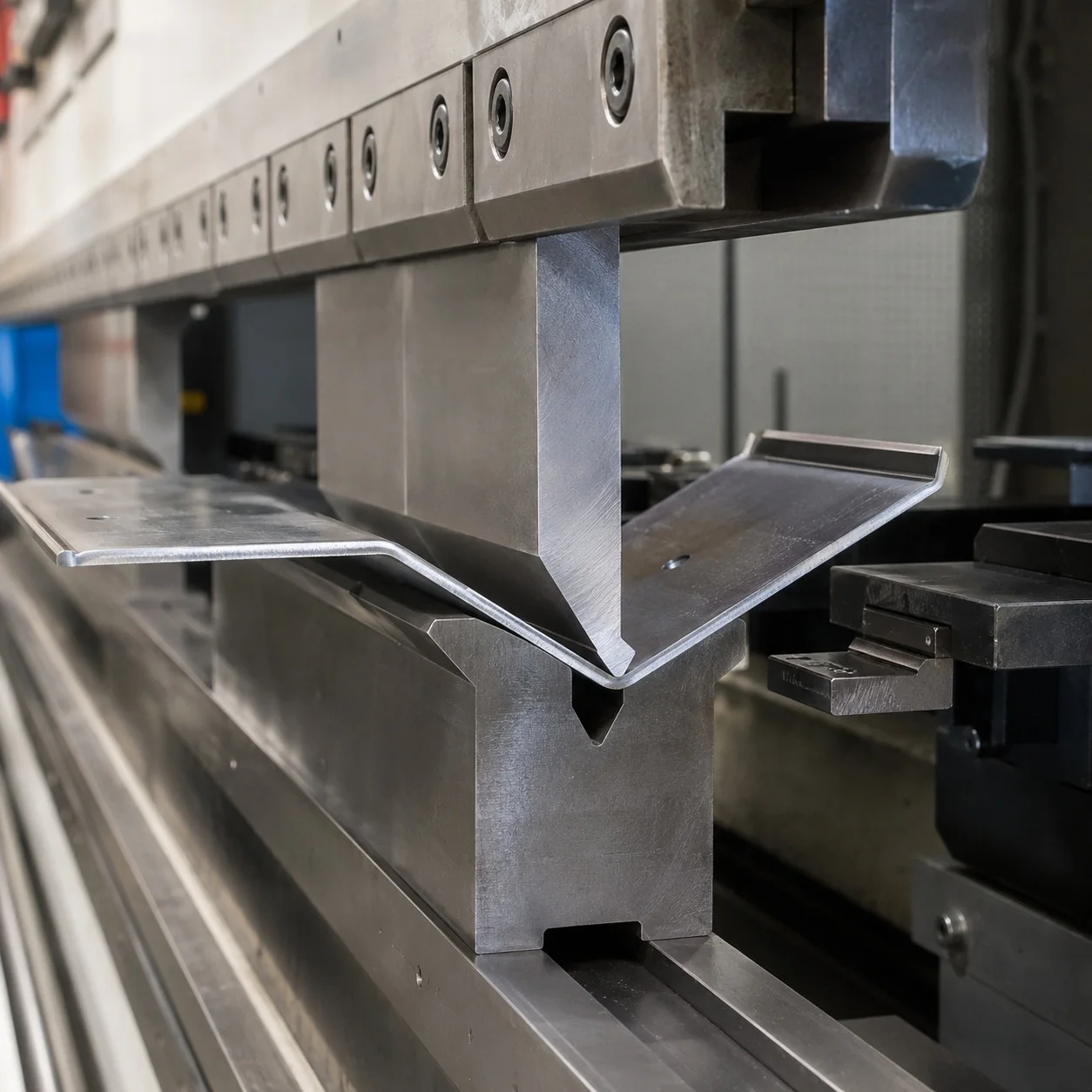
Bending forms flanges, channels, trays, brackets, and enclosure features while accounting for material thickness, inside radius, bend direction, and springback.
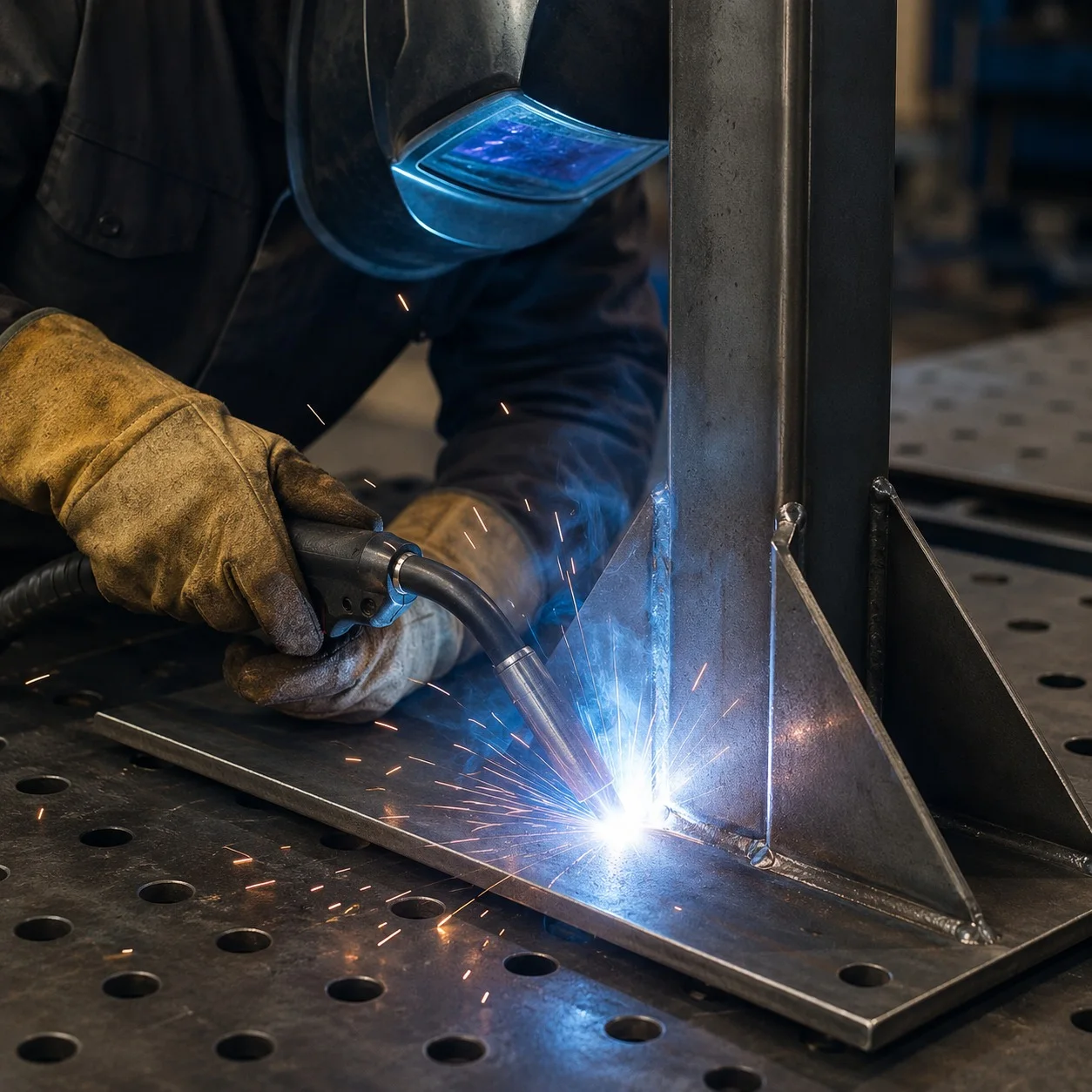
Welding joins fabricated sheet metal sections into assemblies, frames, housings, and structural components where part strength and fit-up matter.
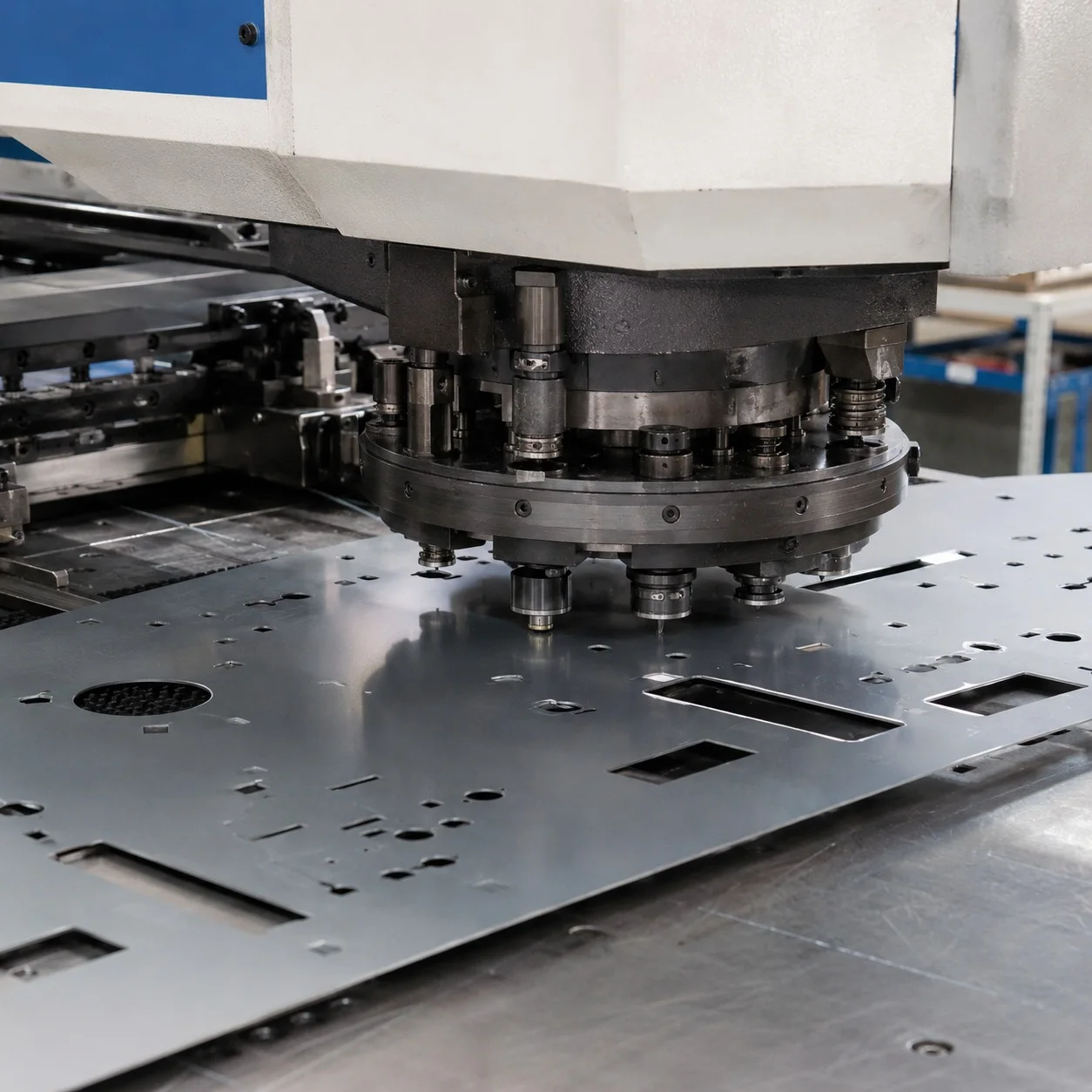
Punching supports repeatable holes, louvers, cutouts, and formed features when part geometry and volume make a press-based route suitable.
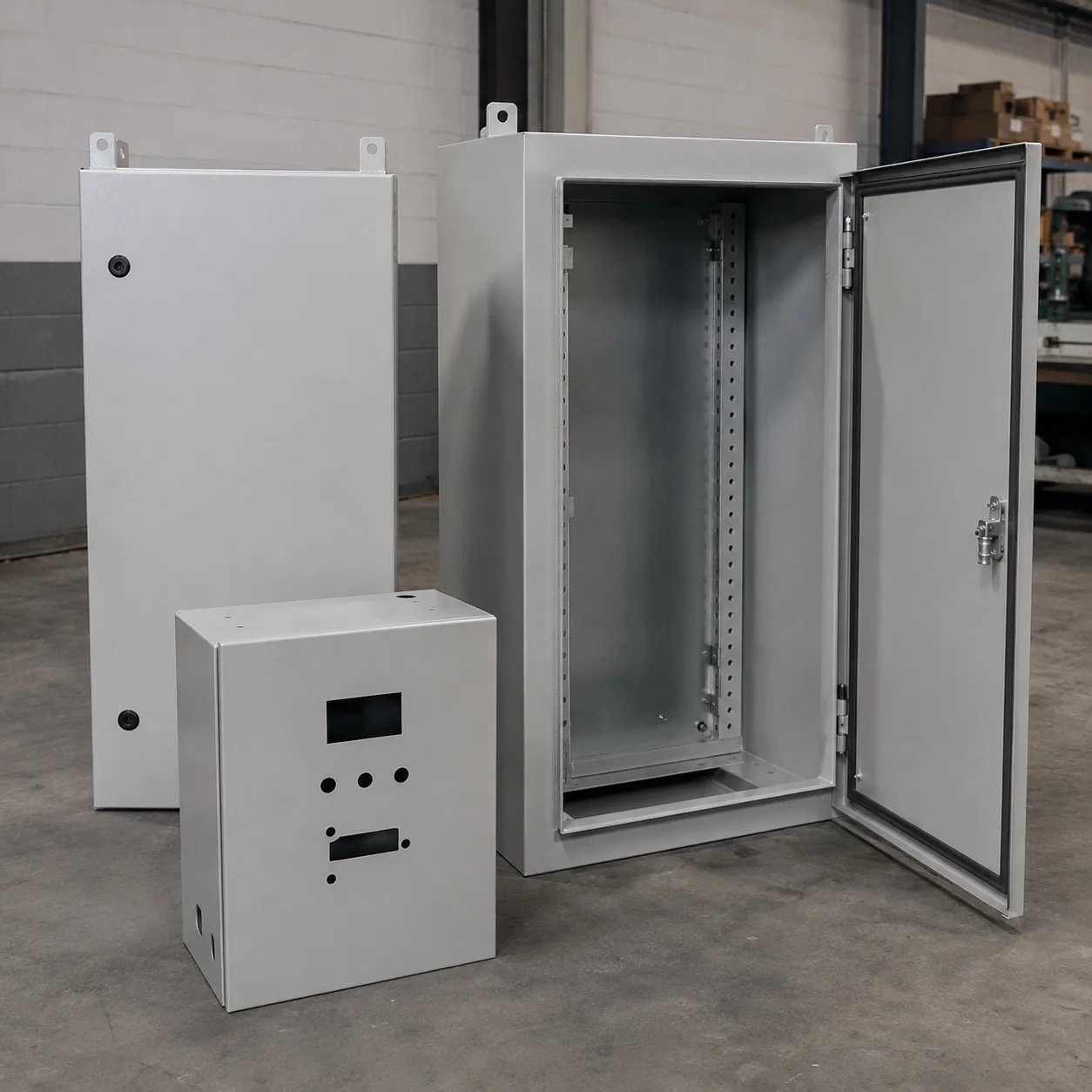
Sheet metal enclosures combine cut, formed, joined, and finished features to protect electronics, controls, and industrial equipment while supporting assembly access.
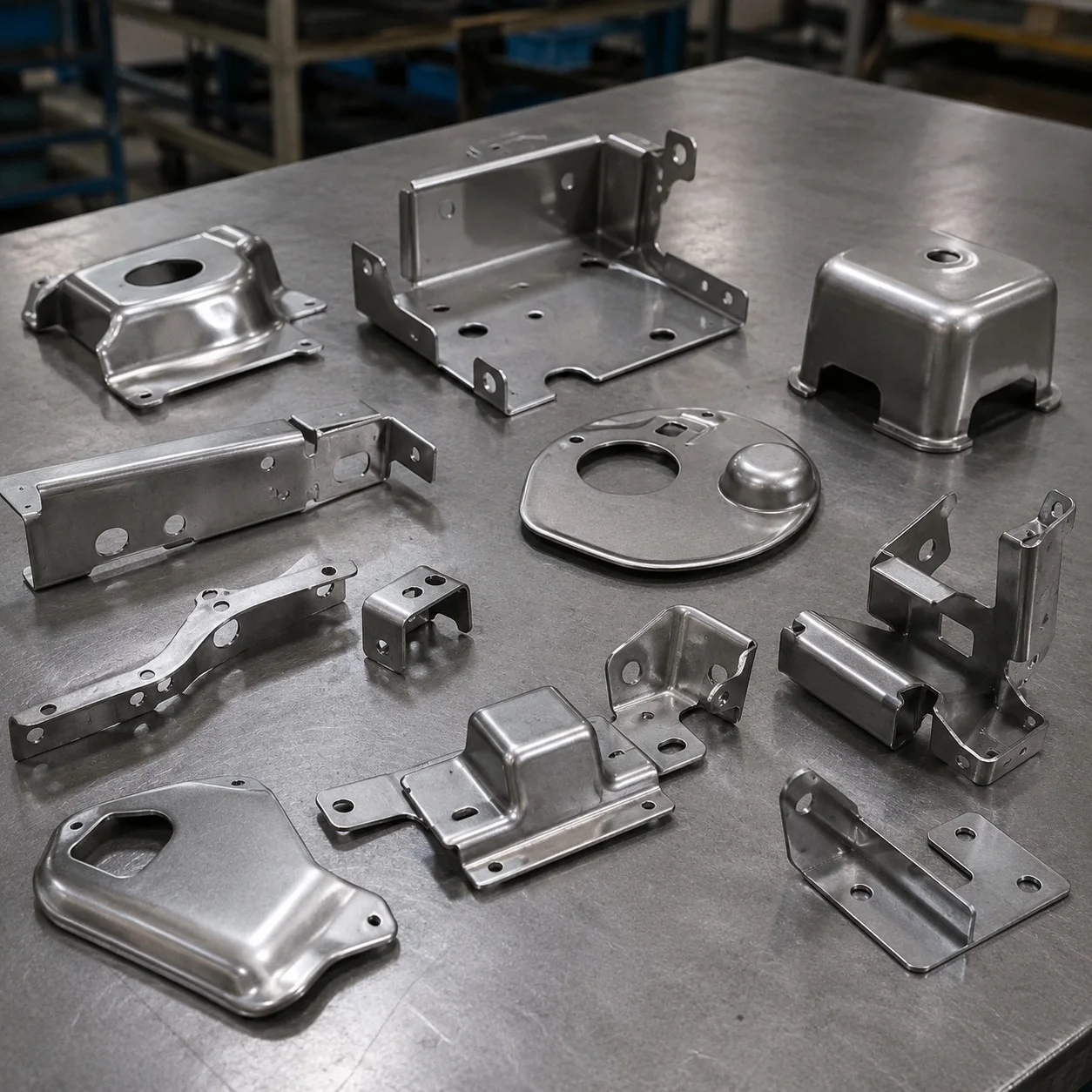
Stamping and press forming are considered for repeat sheet metal geometry where a dedicated tooling route can improve consistency at planned volume.
SUPPLIER COLLABORATION
RapidMfgPro may introduce independent sheet metal suppliers based on process fit, material, thickness range, part complexity, quality requirements, and production capacity.
Instead of managing separate cutting, forming, joining, finishing, and delivery conversations, you work through one coordinated project flow from drawing review to shipment planning.
Supplier comparison for process fit, quality, and reliability.
Best-fit fabrication route and partner selection for your part.
Drawing review and feedback to improve manufacturability.
Inspection planning and quality control throughout production.
Shipment planning and project communication managed through one flow.
SURFACE FINISHING
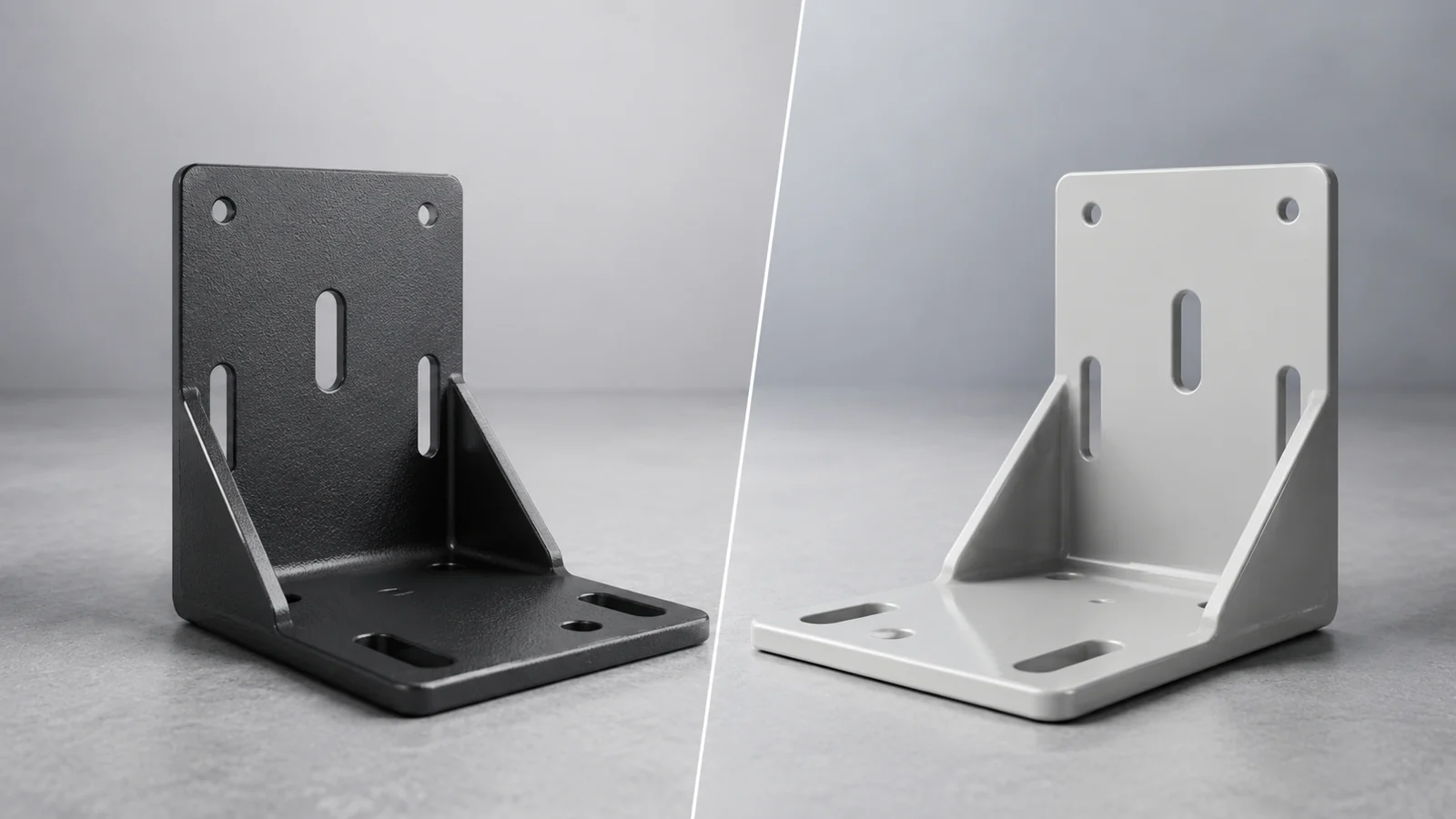
The right finish protects your parts, supports functional performance, and completes the intended appearance. Explore finishing options selected around your material, exposure conditions, conductivity needs, and downstream assembly requirements.
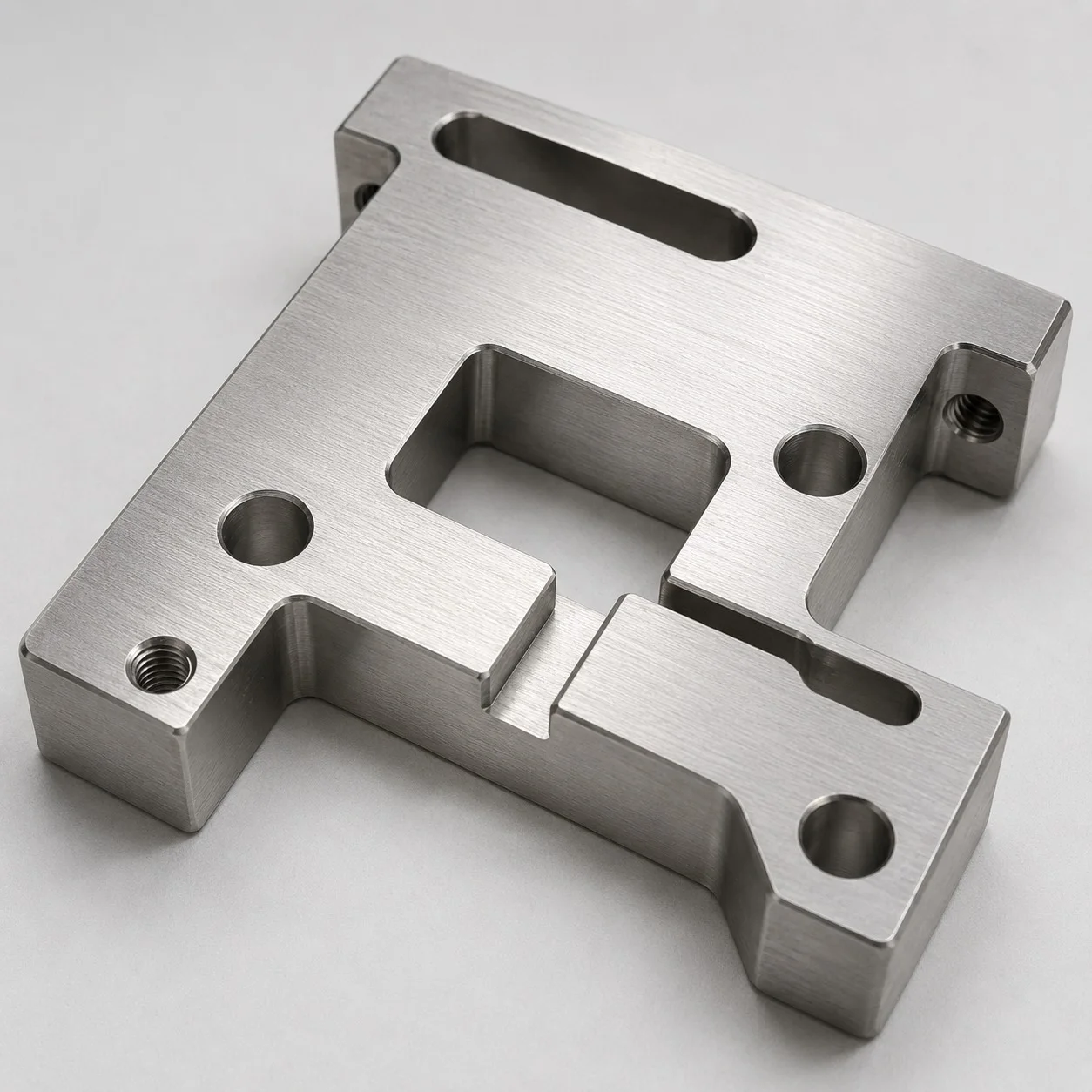
A practical untreated finish for non-cosmetic parts where visible fabrication marks are acceptable.
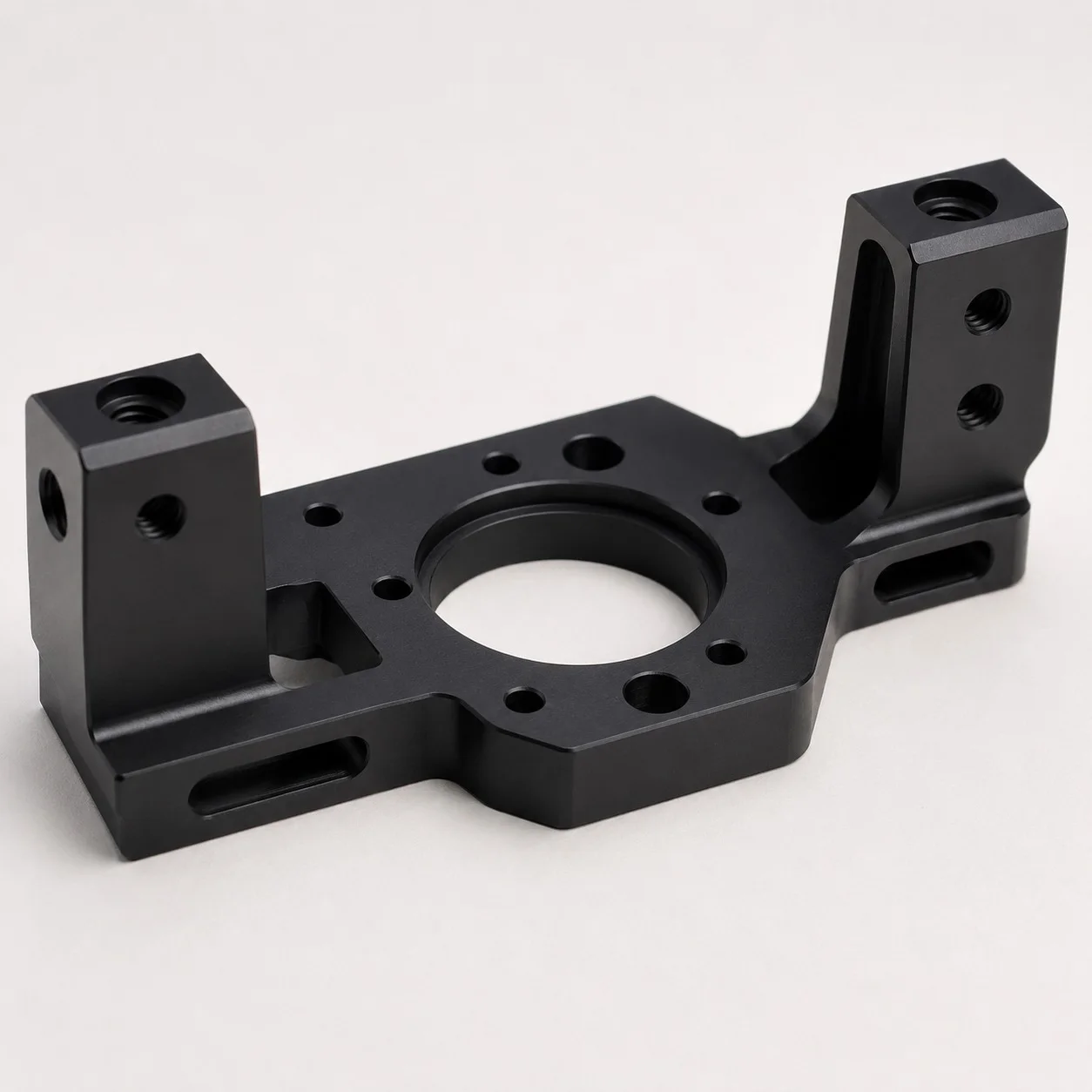
An aluminum oxide finish that adds corrosion resistance and controlled color to sheet metal parts.
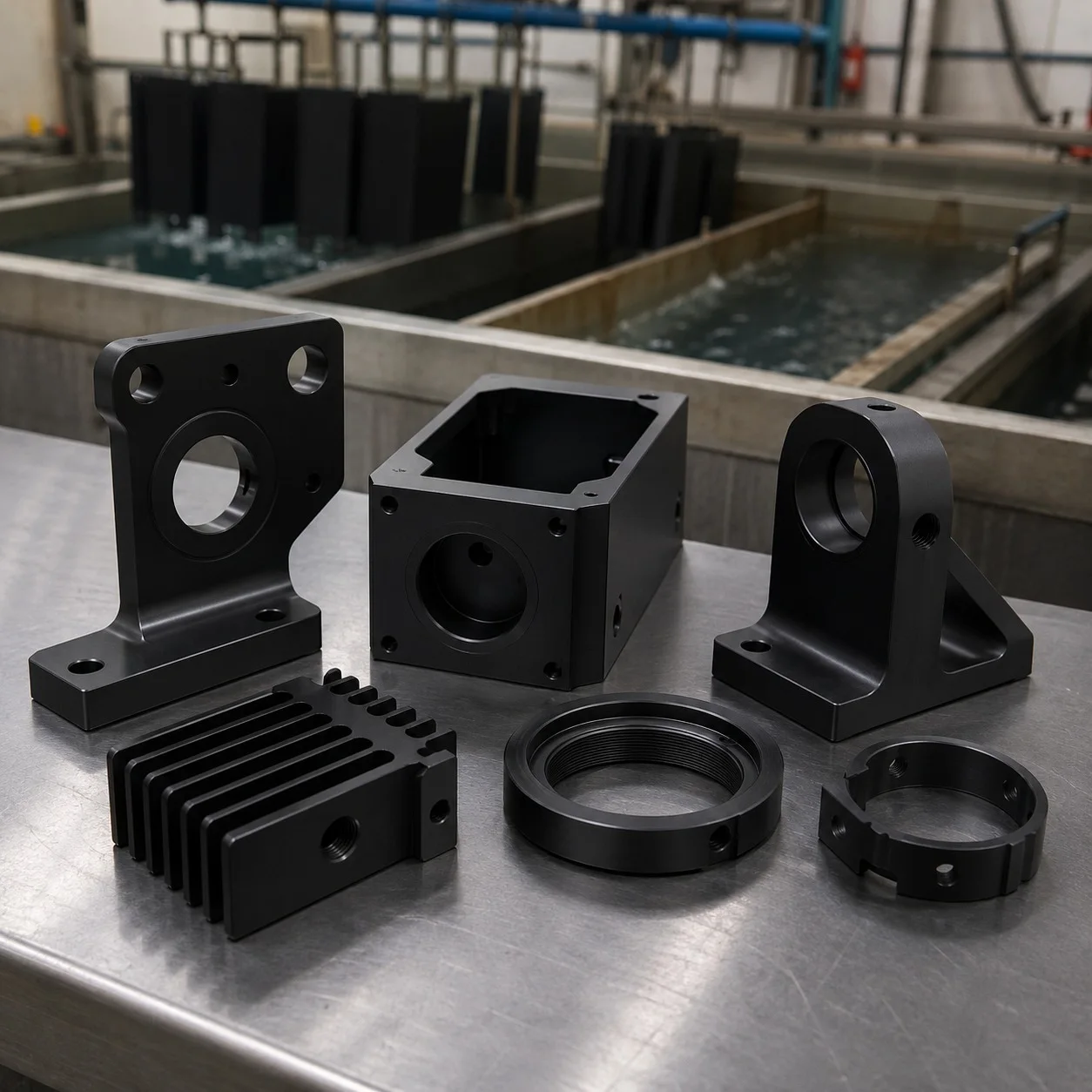
A thicker aluminum oxide treatment used where higher surface durability and wear resistance are required.
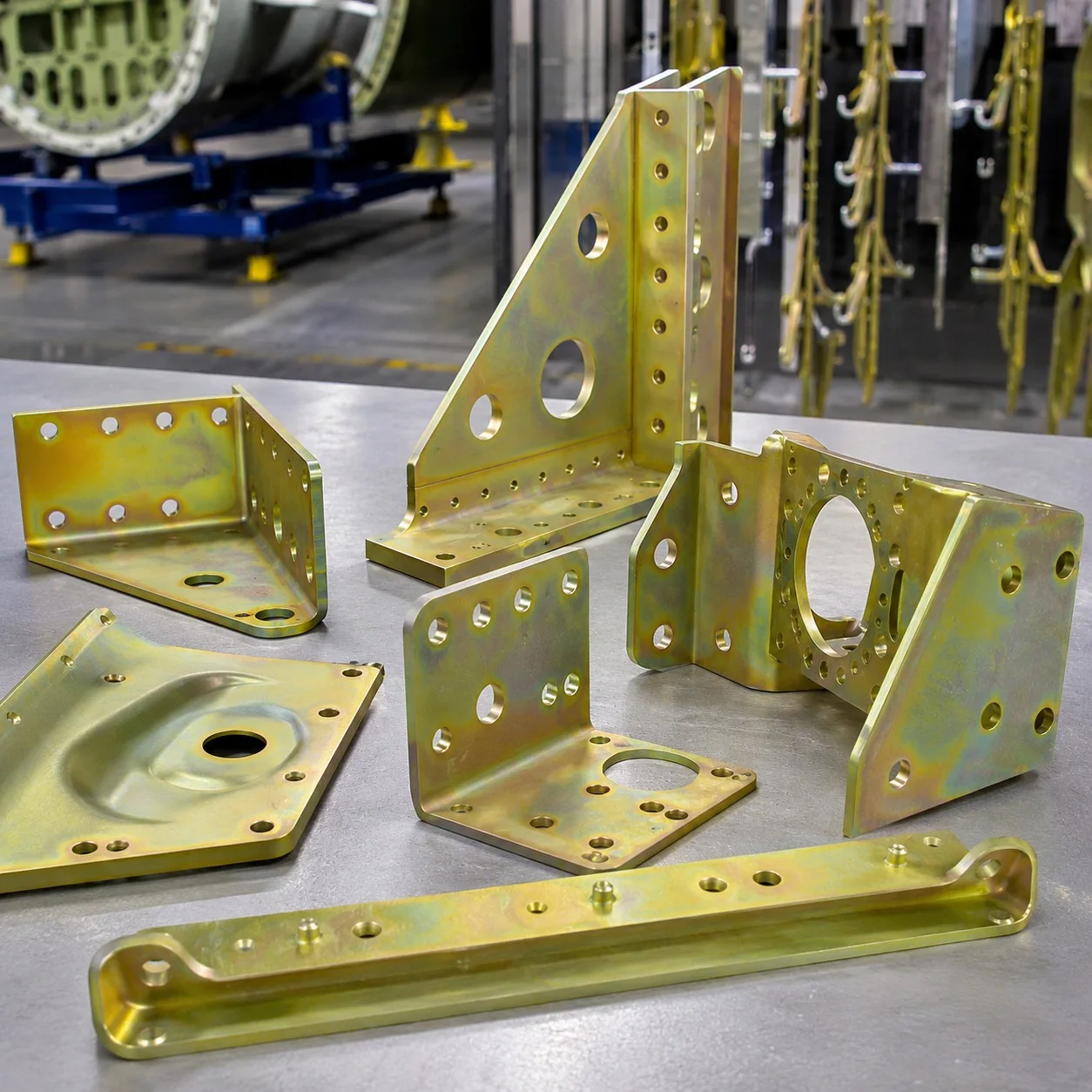
A conversion coating for aluminum that improves corrosion protection while maintaining electrical conductivity.
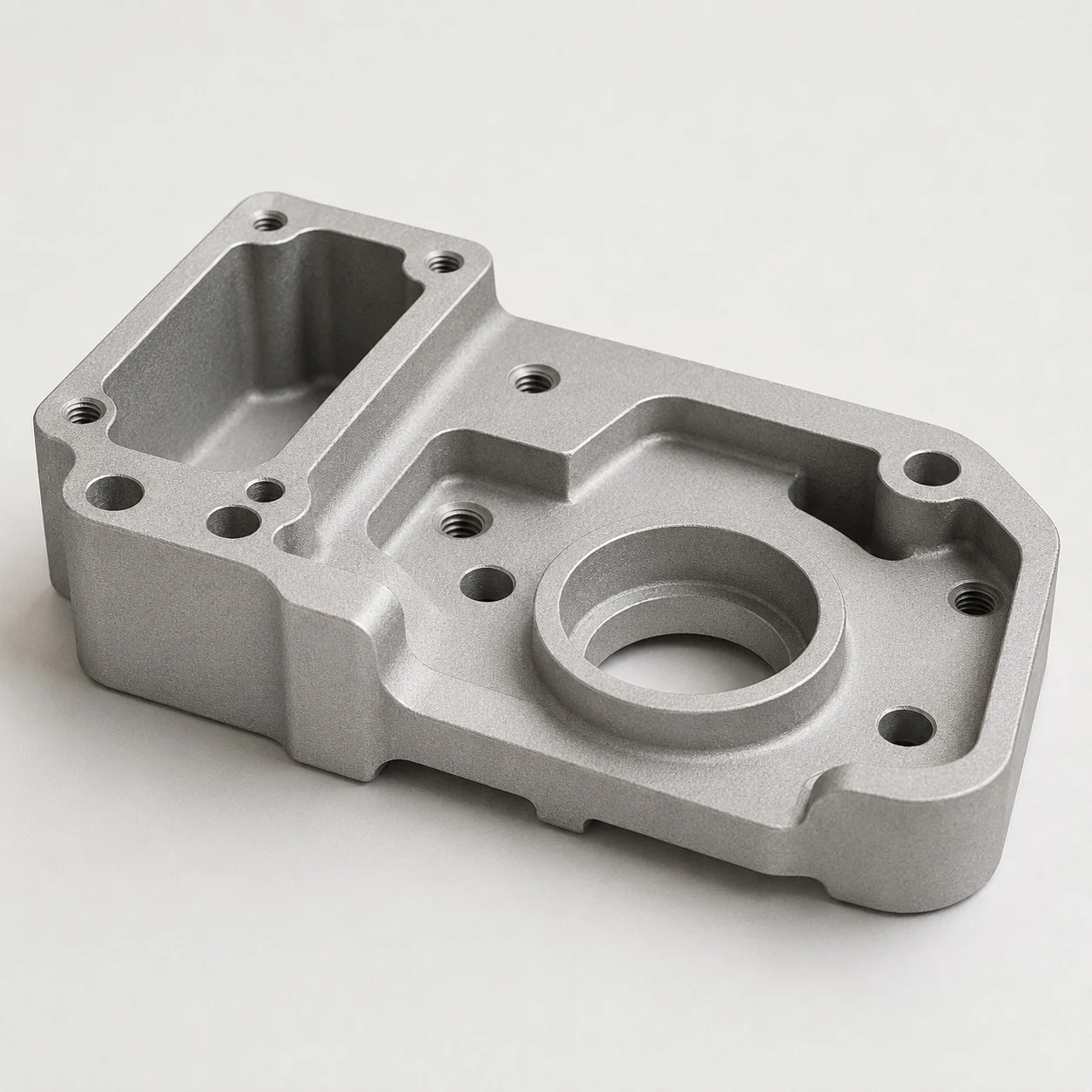
Creates a uniform matte texture and helps reduce visible handling marks before coating or assembly.
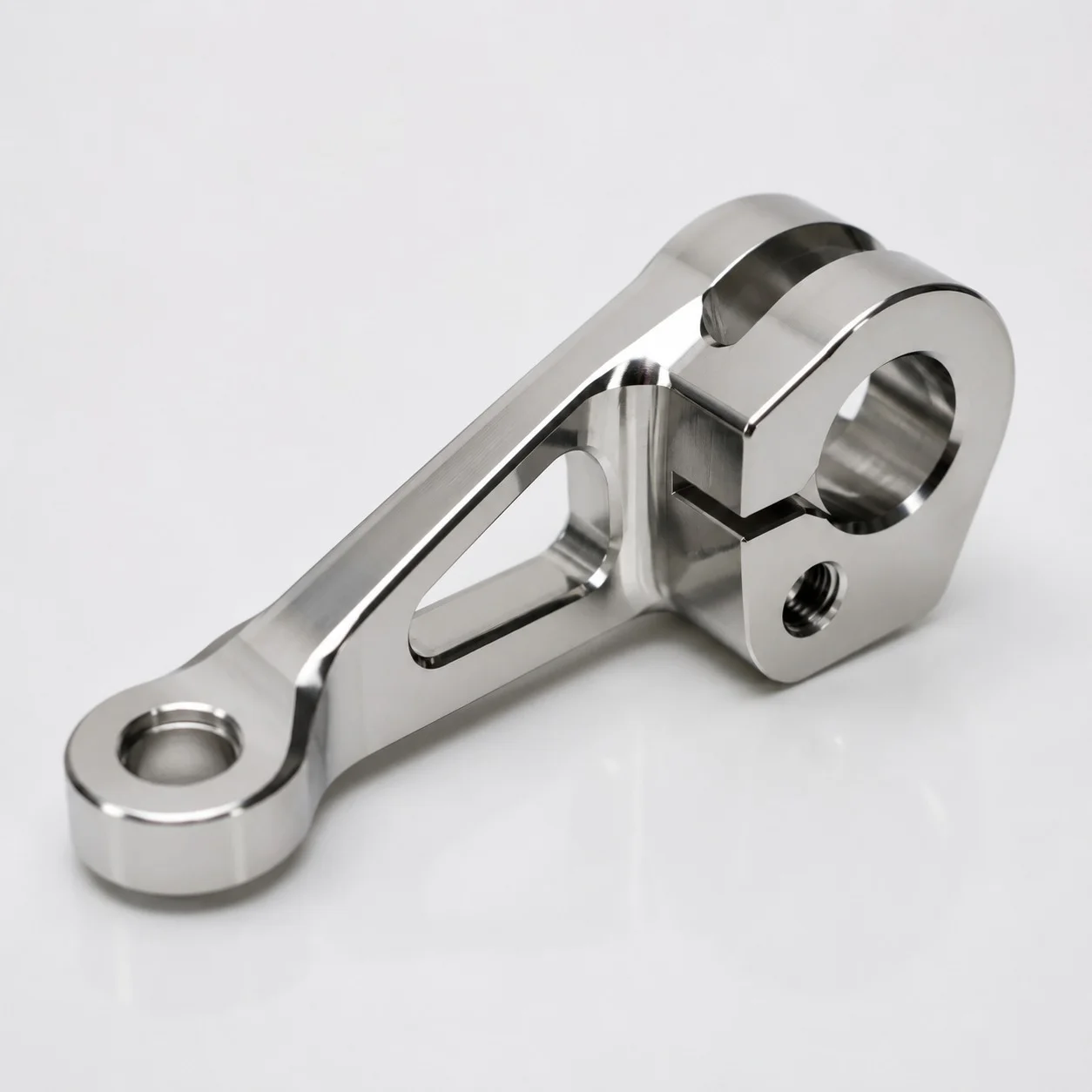
Refines selected visible areas where a brighter, smoother cosmetic surface is required.
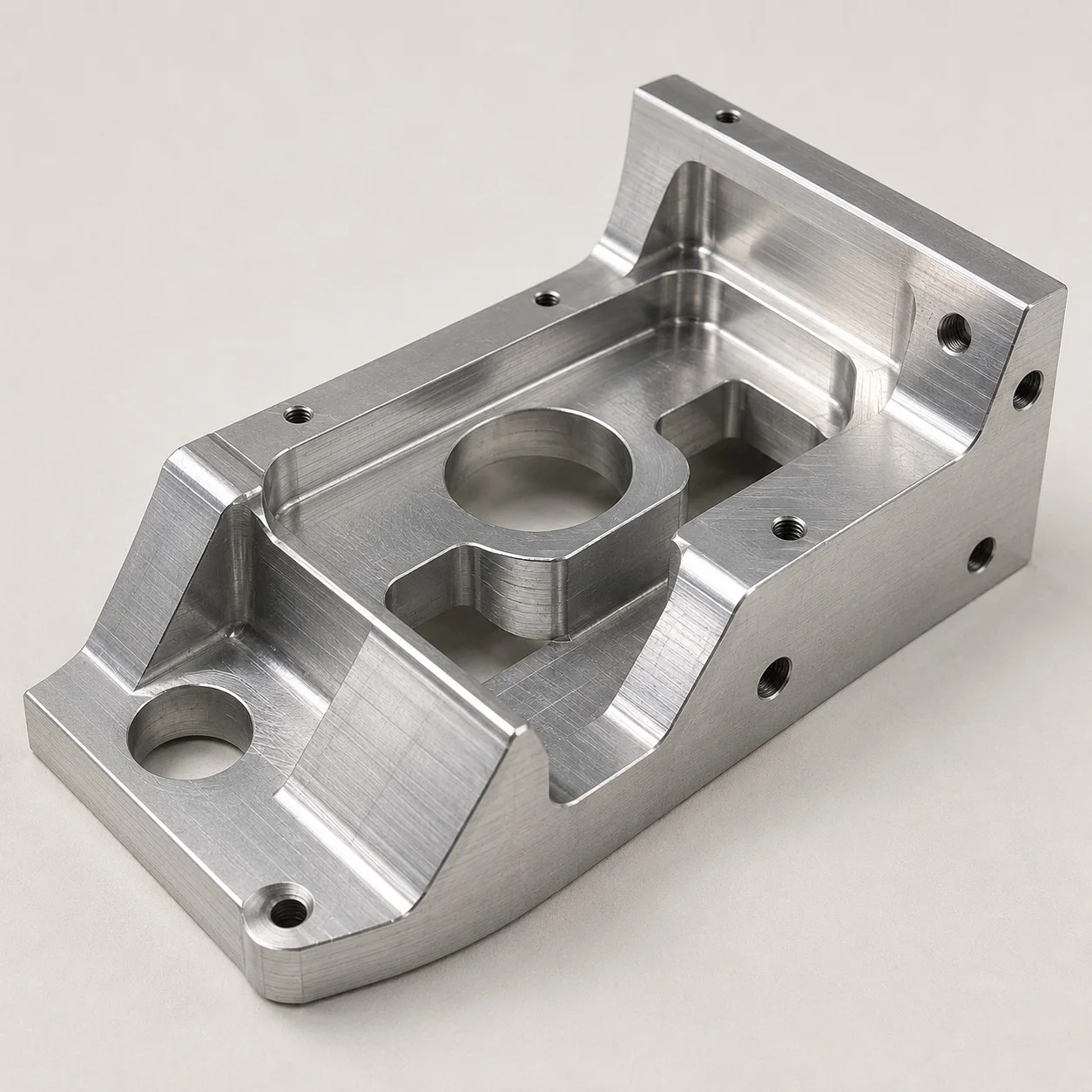
Creates a directional satin texture for visible panels, covers, and decorative sheet metal surfaces.
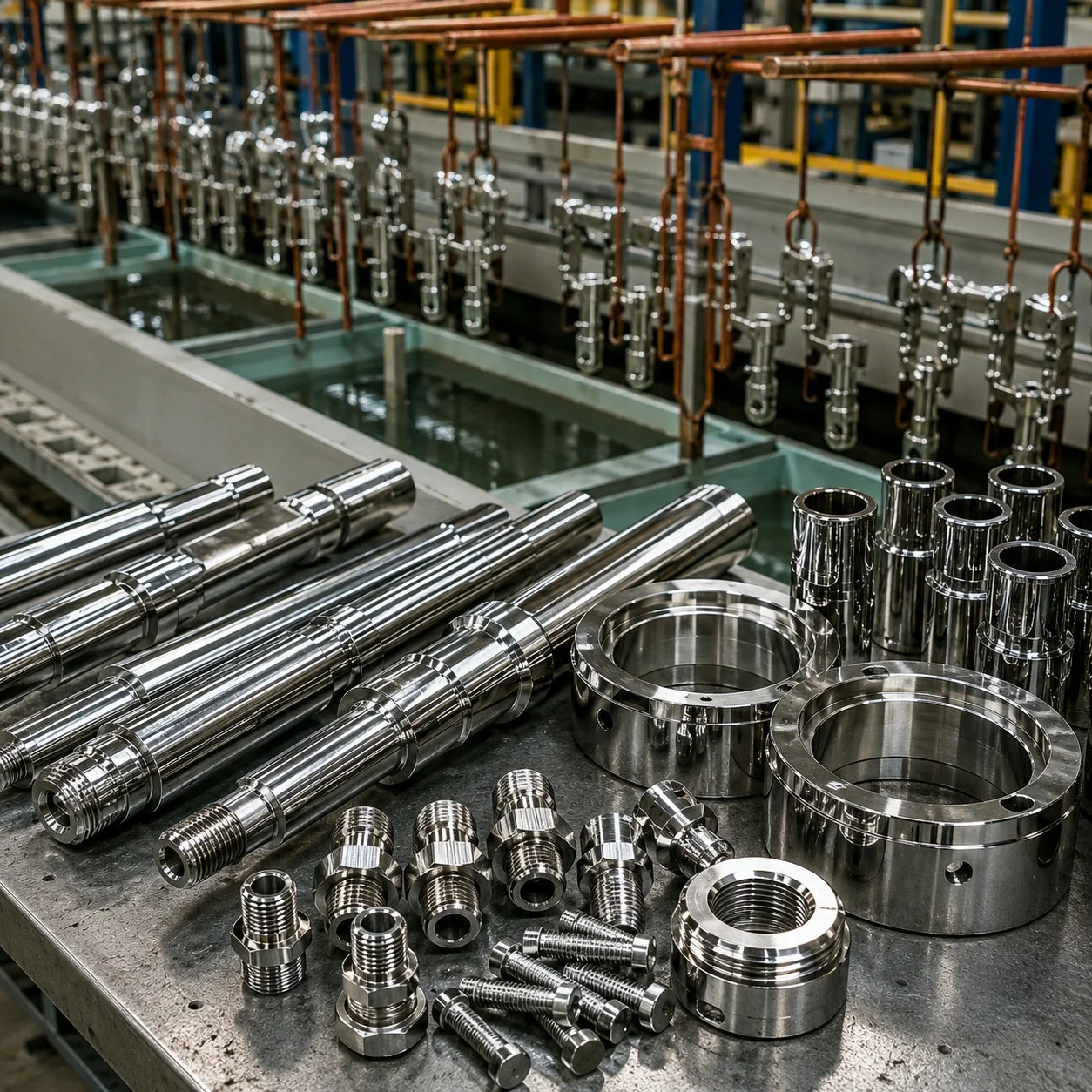
Adds a metallic layer to support corrosion resistance, conductivity, wear behavior, or appearance.
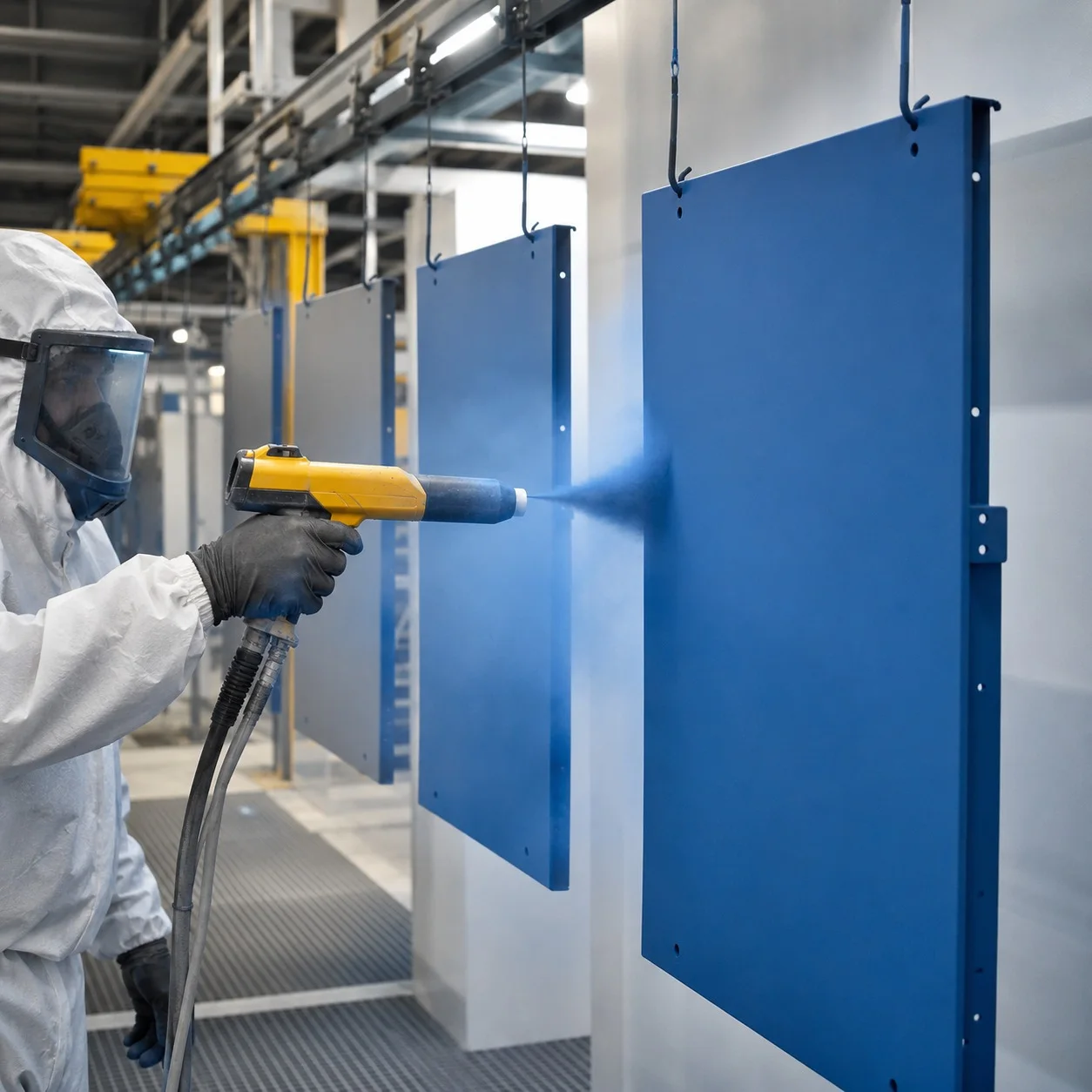
Applies a durable color coating with broad texture and appearance options for fabricated assemblies.
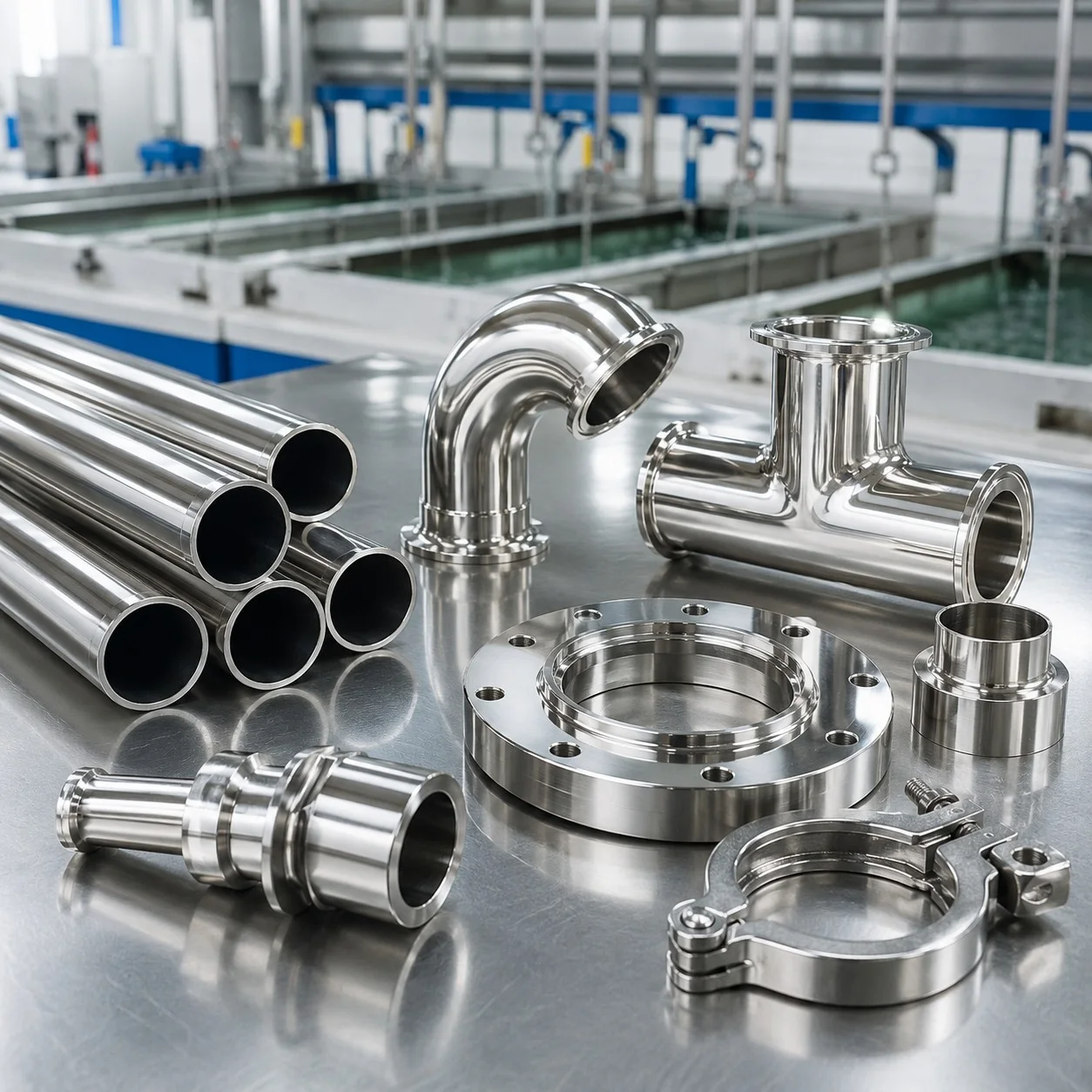
Electrochemically smooths suitable stainless steel surfaces to improve cleanability and corrosion behavior.

Adds protective color and appearance where a painted surface is specified for the final sheet metal part.
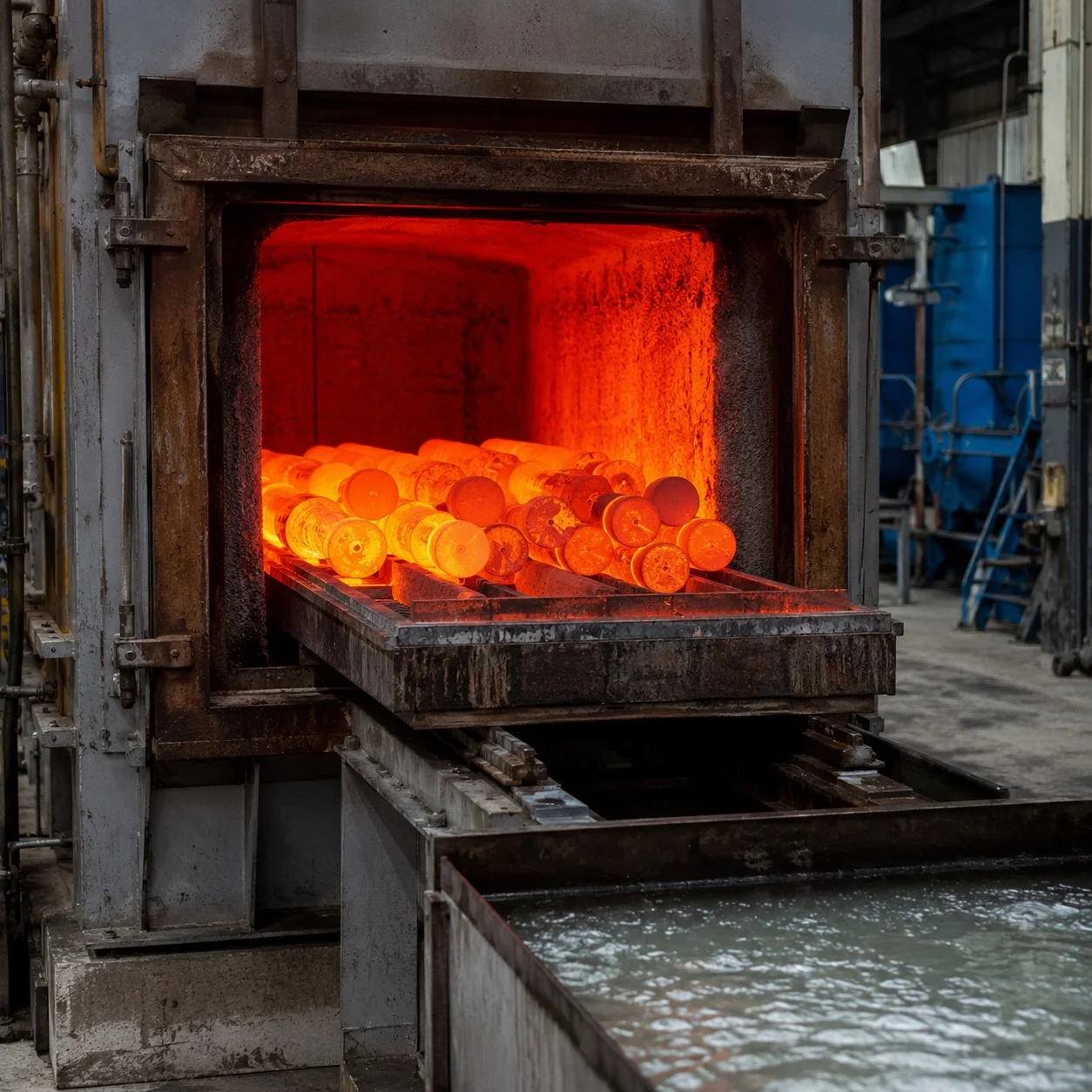
Considered when hardness, strength, or stress condition must be addressed in the fabrication plan.
Use the material, environment, appearance goals, and part function to define the finish requirement for suppliers.
Base material type and thickness should be considered before a finish is specified.
Specify the intended visual result, from matte to high gloss, in the supplier RFQ.
Corrosion, conductivity, wear, and cleanability remain part of the selection.
SHEET METAL FABRICATION PROJECTS
Whether validating a design, building bridge batches, or scaling to repeat production, RapidMfgPro helps buyers compare independent sheet metal suppliers for the required fabrication route.
 01
01
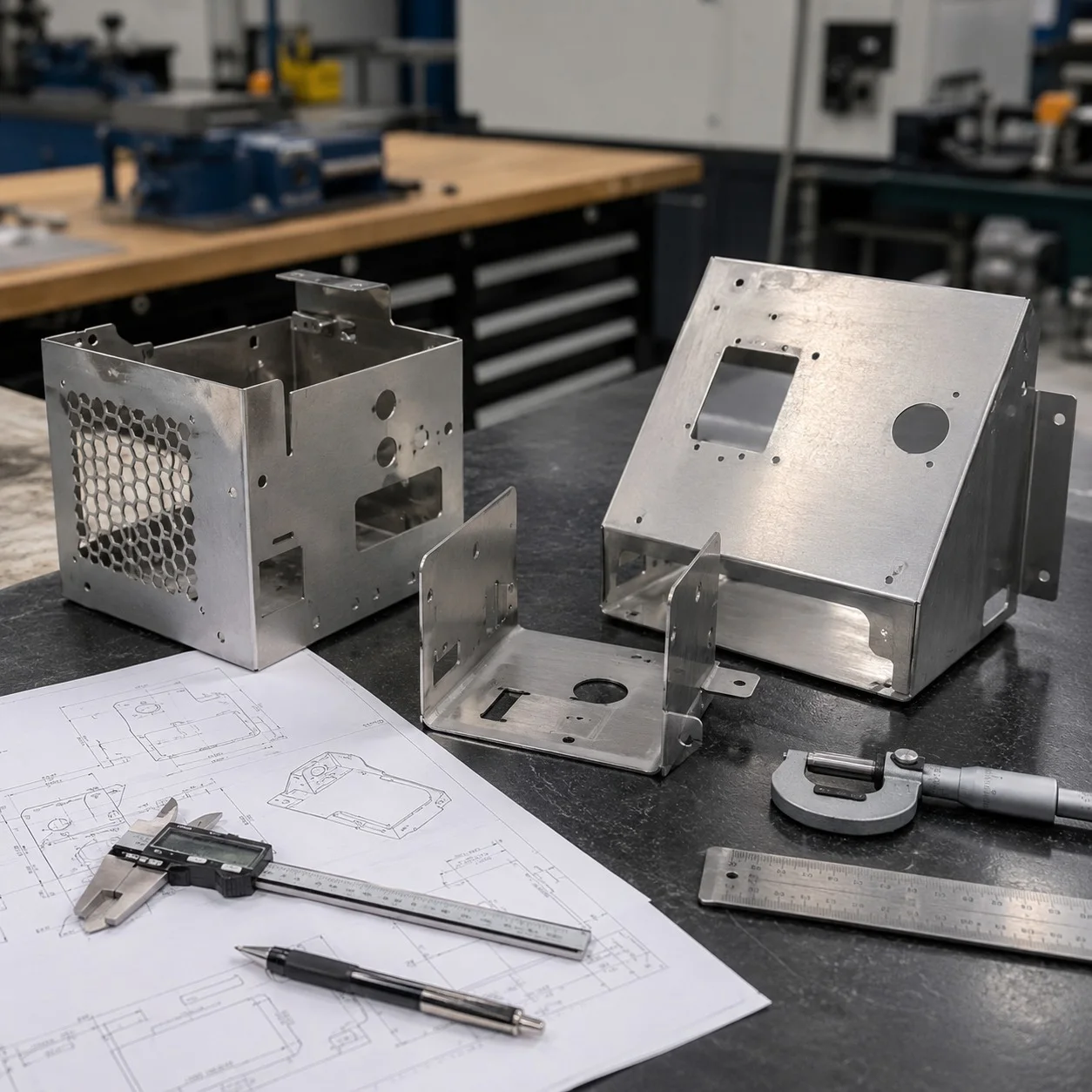
Use early sheet metal builds to validate fit, bend allowances, mounting locations, access, and assembly sequence before locking in a repeat production route.
 02
02
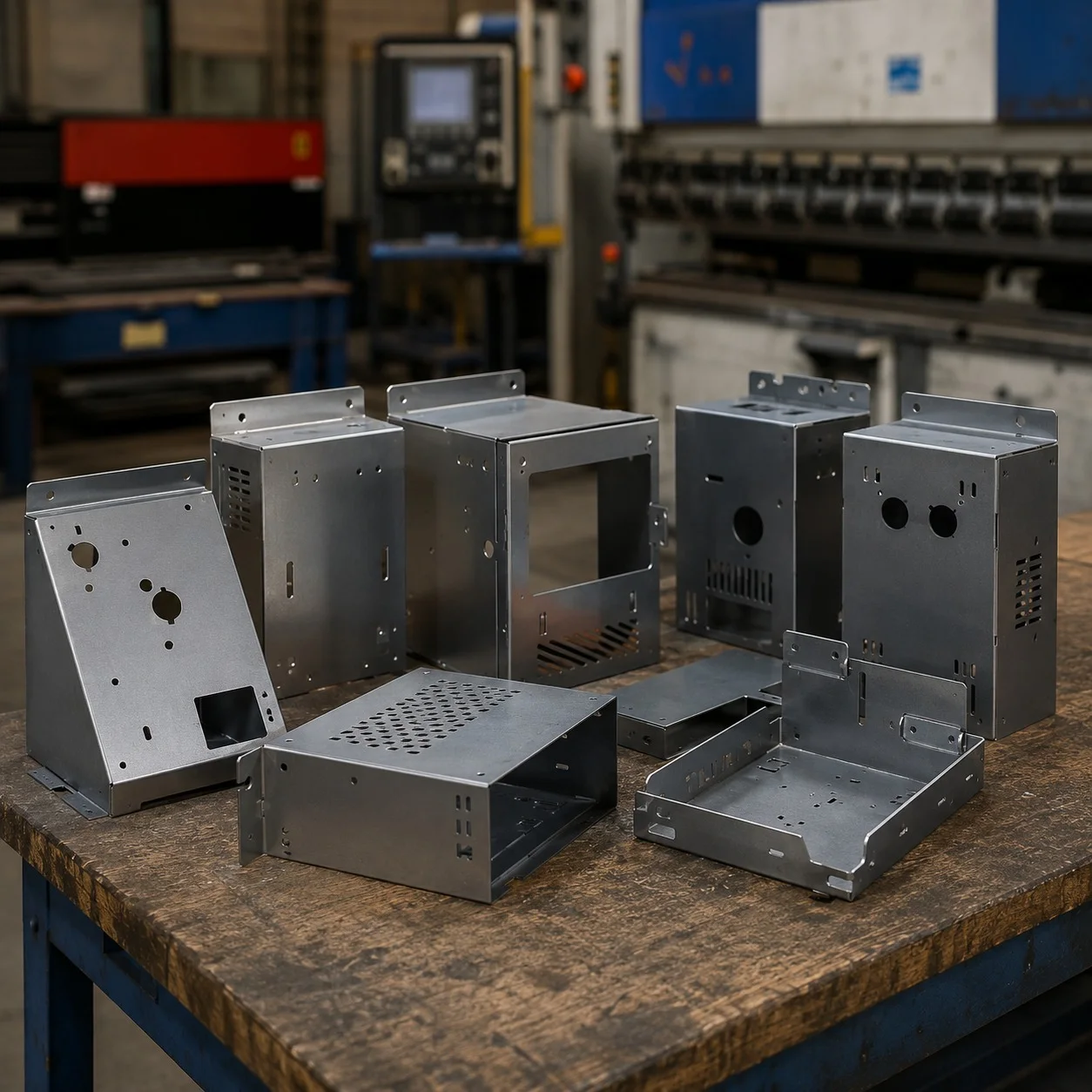
For small batches and bridge production, RapidMfgPro helps buyers organize process, material, fabrication, inspection, and delivery questions for potential suppliers.
 03
03
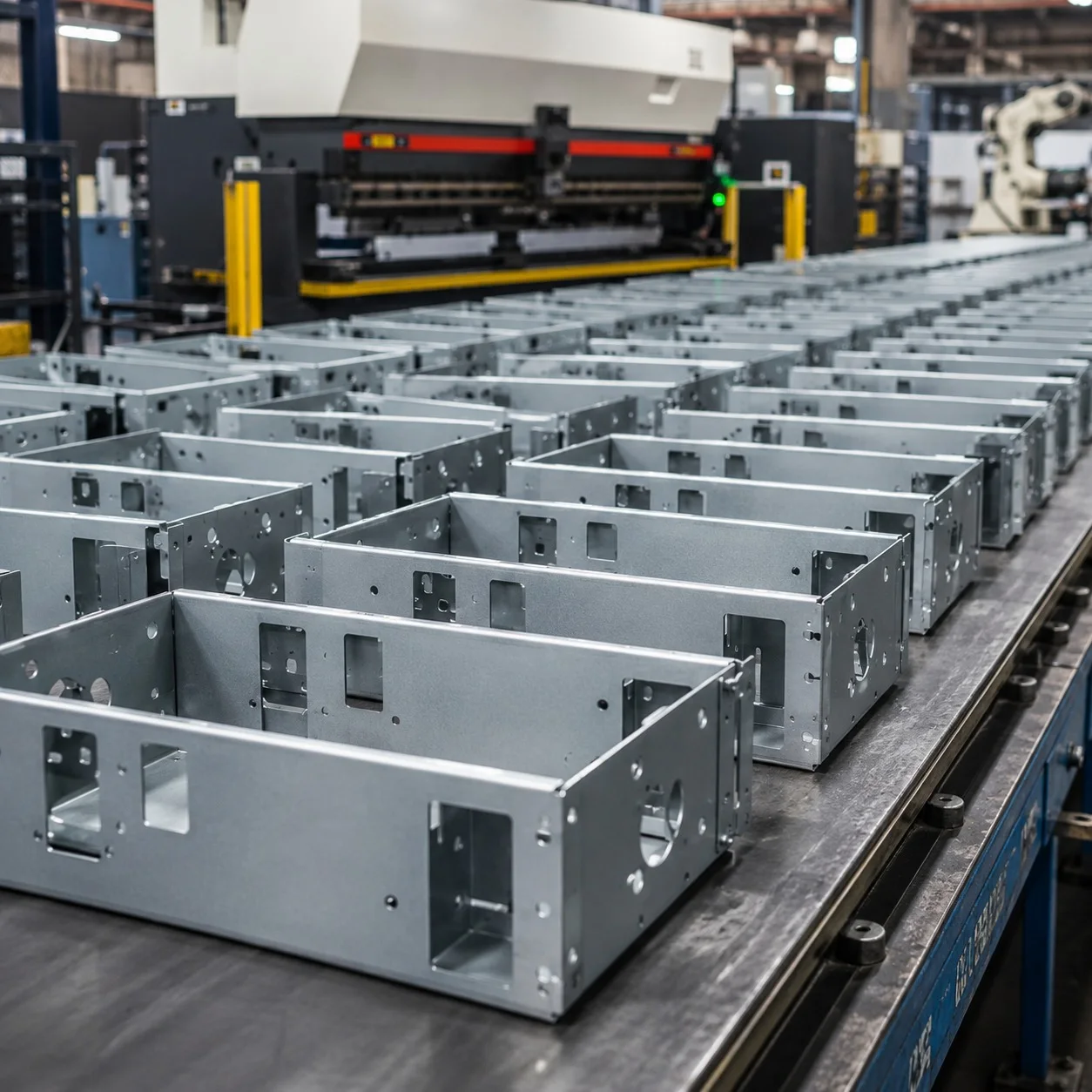
For recurring orders, the agreed drawing requirements, material, fabrication route, inspection criteria, packaging, and delivery cadence are carried forward through a coordinated project workflow.
All projects include drawing review, manufacturability feedback, and on-time delivery planning.
ENGINEERING GUIDELINES
Use these key planning points to help ensure manufacturability, assembly fit, and consistent quality throughout your sheet metal fabrication project.
Dimensional control
Define the required tolerance standard and identify dimensions that need tighter control on the drawing.
Holes, slots, profiles
Laser-cut holes, slots, and profiles should be reviewed with material thickness, burr direction, edge condition, and assembly fit in mind.
Angle & radius
Specify bend angle, inside radius, bend direction, and critical formed dimensions so springback and tooling needs can be evaluated.
Edge distance
Call out dimensions from formed edges or datums when flange length, panel alignment, or downstream assembly fit is critical.
Hole location
Keep hole-to-bend relationships clear on the drawing and identify any clearance, fastener, or alignment requirements.
Sheet metal fabrication supports parts that need protection, structure, mounting, airflow, access, or integration with other components. RapidMfgPro helps buyers compare fabrication routes against function, material, assembly method, and production plan.
THE RapidMfgPro APPROACH
From first review to repeat production, buyers should keep supplier responsibilities, drawing data, inspection requirements, and delivery terms clearly documented.
PROCESS VALIDATION
RapidMfgPro helps buyers review thickness, flat-pattern details, bend sequence, joining needs, and critical interfaces before comparing suppliers.
COORDINATED EXECUTION
Drawing updates, process questions, supplier communication, inspection requirements, and delivery planning stay organized through one project flow.
REPEAT READY
Approved material, forming details, joining method, finish, inspection needs, and packaging requirements are carried forward for planned repeat production.
SHEET METAL FABRICATION
Sheet metal fabrication transforms flat metal stock into functional parts through processes such as laser cutting, punching, bending, welding, hardware insertion, and finishing. It is commonly used for enclosures, brackets, panels, chassis, covers, guards, and formed structural components.
A practical sheet metal fabrication route begins with the drawing: material grade, thickness, flat pattern, bend details, hole locations, joining requirements, finish, and quantity all influence how the part should be made. The selected process may combine cutting, forming, joining, and secondary operations in one coordinated sequence.
RapidMfgPro provides sourcing guidance for sheet metal projects by organizing requirements, supplier capability questions, quotation comparisons, and production follow-up points.