Time to read: 6 min
Low-Volume Manufacturing: Processes, Costs, and Scaling Strategies
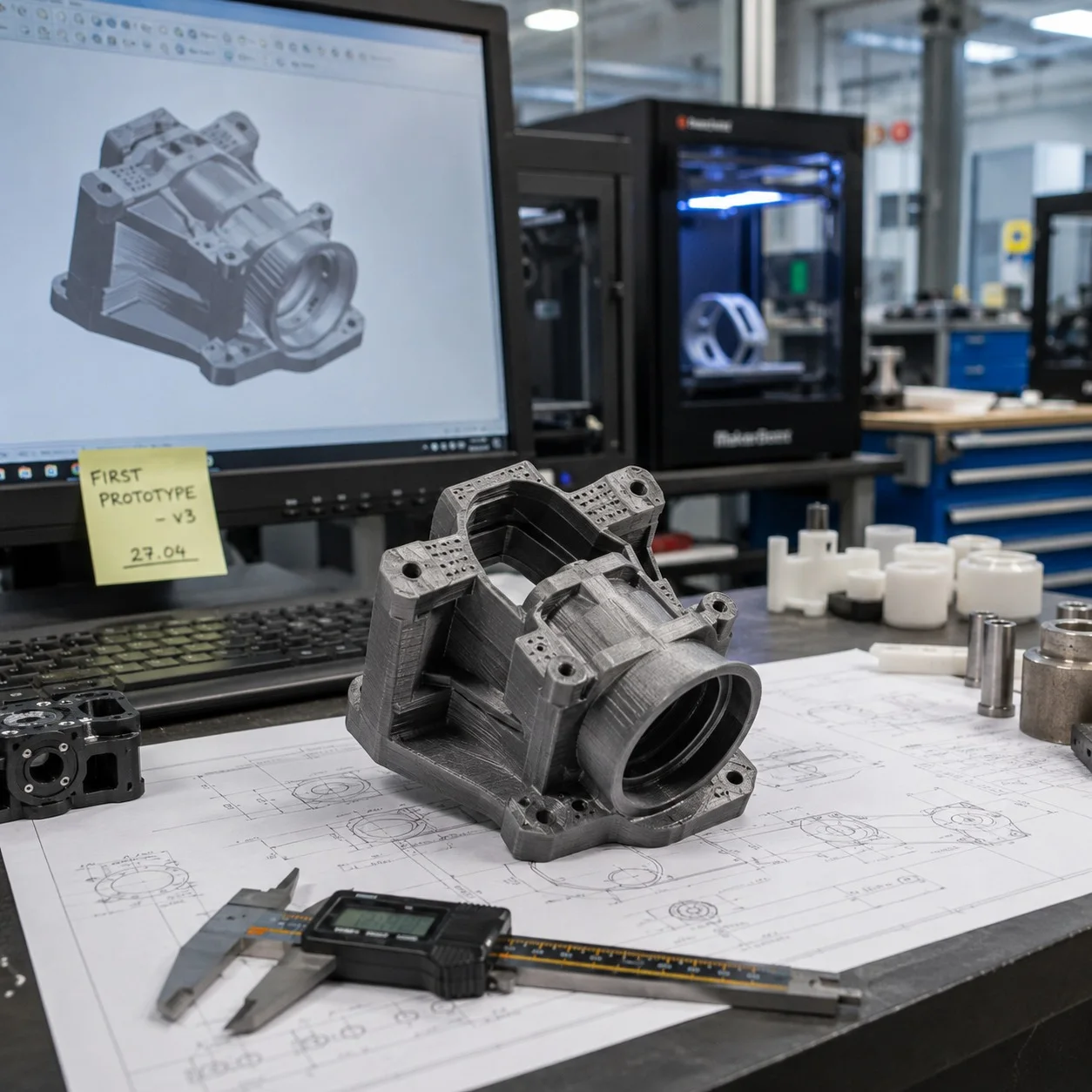
Low-volume manufacturing fills the gap between one-off prototypes and full-scale mass production. It is used when a company needs tens, hundreds, or a few thousand parts for product validation, market launch, replacement inventory, bridge production, customized equipment, or specialized industrial applications. The best process is not always the one with the lowest unit price. It is the one that balances tooling, lead time, design flexibility, quality, and the risk of future changes.
This guide explains low-volume manufacturing processes, cost drivers, and scaling decisions. RapidMfgPro helps buyers compare CNC machining, sheet metal fabrication, 3D printing, die casting, and independent suppliers for this production stage.
Why Companies Use Low-Volume Manufacturing
Low-volume production is valuable when demand is real but not yet stable. A startup may need 100 units for an initial launch. An industrial equipment company may require 50 replacement assemblies each quarter. A medical device team may need validation components before regulatory testing. An automotive supplier may need bridge parts while production tooling is being completed.
Manufacturing in smaller batches reduces inventory exposure and makes engineering changes easier. It also allows teams to collect field feedback before committing to expensive tooling. The tradeoff is that unit cost may be higher than mass production, so the process and batch strategy must be selected carefully.
Common Low-Volume Manufacturing Processes
CNC Machining
CNC machining is one of the most flexible choices for low-volume metal and plastic parts. It does not require dedicated production tooling, and it can produce functional parts from the same materials used in final products. CNC milling and turning are suitable for housings, brackets, shafts, plates, fixtures, connectors, and complex precision parts.
The main cost drivers are material, machine time, number of setups, tool access, tolerance, surface finish, and inspection. CNC machining is especially attractive when designs may still change or when annual volume does not justify molds or dies.
Sheet Metal Fabrication
Sheet metal fabrication works well for enclosures, panels, brackets, covers, chassis, and frames. Laser cutting and bending require little dedicated tooling for many geometries, so the process supports fast revisions. Costs increase with complex bend sequences, welding, hardware insertion, finishing, and tight assembly requirements.
3D Printing
Industrial 3D printing can produce complex forms without traditional tooling. It is useful for prototypes, fixtures, ducting, lightweight structures, custom covers, and parts with internal channels. SLA offers fine detail, SLS and MJF are suitable for durable polymer parts, and metal additive manufacturing can support specialized geometries.
3D printing is not automatically the lowest-cost process. Build size, material, orientation, support removal, finishing, and dimensional requirements must be considered. It is most valuable when geometry or speed offsets the higher material and machine cost.
Die Casting and Injection Molding
Tooling-based processes can still be appropriate at lower volumes when the part is stable and future demand is expected to grow. Prototype or simplified tooling may reduce initial investment, but the design must be reviewed carefully because changes after tooling are expensive. Tooling cost should be evaluated against expected lifetime volume, not only the first order.
What Drives Low-Volume Manufacturing Cost?
Low-volume cost includes more than material and machine time. Engineering review, programming, setup, fixtures, tooling, inspection, finishing, packaging, and shipping are distributed across a smaller quantity. This is why increasing a batch from 10 to 50 parts may reduce unit price significantly, while increasing from 500 to 550 may have little effect.
- Setup and programming: one-time work divided across the batch.
- Material utilization: stock size, scrap, and purchasing minimums.
- Geometry: deep pockets, thin walls, undercuts, and multi-side features increase time.
- Tolerances: tighter limits require stable processes and more inspection.
- Finishing: anodizing, plating, powder coating, polishing, and masking add handling.
- Quality documentation: dimensional reports, material certificates, and first article inspection require additional work.
- Logistics: special packaging, international shipping, and split deliveries affect total landed cost.
Use Design for Manufacturing to Reduce Cost
Small design changes can have a large effect on low-volume cost. Standardizing hole sizes reduces tool changes. Increasing internal radii allows larger, faster milling tools. Avoiding unnecessarily deep pockets shortens machining time. Using standard sheet thicknesses and bend radii improves material availability. Relaxing noncritical tolerances can reduce inspection and rework risk.
The goal is not to simplify every feature. It is to protect functional requirements while removing cost that does not improve performance. A DFM review before ordering is especially useful when the same design may later move to higher volume.
Choose the Right Batch and Delivery Strategy
Ordering all expected demand at once may reduce unit price but increase inventory risk. A staged plan can provide better control. For example, a company might order 20 validation units, then 100 launch units, followed by scheduled repeat batches. This allows engineering changes between stages and creates real demand data.
Blanket orders or scheduled releases can help when demand is predictable. The manufacturer can plan material and capacity while the customer receives smaller deliveries. For parts with long-lead materials or finishes, purchasing raw stock in advance may reduce future lead time without machining the entire quantity immediately.
Plan for Scaling Before Volume Increases
Scaling should be considered during the first low-volume run. Record inspection methods, approved materials, finish specifications, packaging, and revision status. Identify features that are difficult to machine or inspect. If the design may move from CNC machining to casting or molding, avoid features that prevent future tooling.
A controlled change process is essential. Each revision should have a unique drawing and CAD version. Approved samples and first article reports provide a baseline for repeat orders. Without this information, a new batch may look similar but fail to match the assembly or performance of the previous one.
How to Evaluate a Low-Volume Manufacturing Supplier
Supplier selection should consider process capability, communication, inspection, lead-time reliability, and ability to support changes. Ask how the supplier handles DFM questions, nonconforming parts, material traceability, and repeat orders. A low initial quote has little value if delivery, documentation, or dimensional consistency is unreliable.
RapidMfgPro can help review low-volume projects from CAD through delivery. By comparing process options and clarifying quantity, material, finish, tolerance, and inspection requirements, teams can reduce tooling risk and create a practical path from prototype to repeat production.
Need Help Reviewing a Custom Part?
Share your CAD file and requirements to request supplier matching. Supplier capability and commercial terms must be verified before order placement.
Request Supplier Match