CNC Milling
Controlled cutting helps avoid heat buildup, edge damage, and distortion in sheet and plate components.
Explore CNC milling →MATERIAL GUIDE AND SUPPLIER SOURCING
Use this independent guide to compare typical PVC properties, machining and finishing considerations, and the information suppliers may need before quoting custom parts.
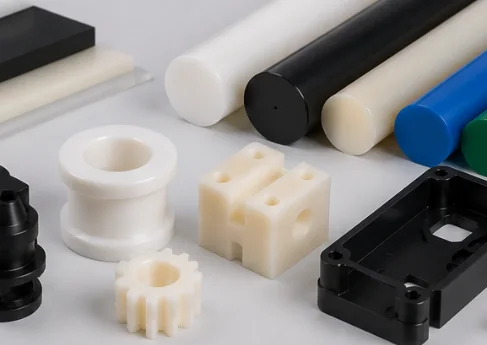
MATERIAL OVERVIEW
Relative project profile
| Common Grades | Stock Forms | Machining | Finish Options | Production Fit |
|---|---|---|---|---|
| Rigid PVC, CPVC options by requirement | Sheet, plate, rod, tube | Low heat, sharp tooling, controlled chip removal | As-machined, edge finishing, mechanical polishing | Prototype and low-volume industrial parts |
PROCESS PLANNING
RapidMfgPro reviews geometry, tolerance, material behavior, finish, quantity, and inspection requirements before matching the project with suitable manufacturing resources.
Controlled cutting helps avoid heat buildup, edge damage, and distortion in sheet and plate components.
Explore CNC milling →Useful for bushings, sleeves, adapters, and fluid-handling components with moderate loads.
Explore CNC turning →Most parts are used as-machined; edge finishing can improve assembly and appearance.
Discuss finish requirements →DESIGN GUIDE
Use the following points as an early DFM checklist. Final recommendations depend on part geometry, stock form, quantity, finish, and functional requirements.
Request a DFM ReviewAvoid aggressive cutting that softens the edge or changes dimensions.
Prevent flex in wide panels and thin cylindrical walls.
Confirm the exact fluid, temperature, and cleaning conditions.
Specify deburring around handling and assembly areas.
TECHNICAL SPECIFICATION
These are practical sourcing and machining guidelines, not a replacement for the certified material datasheet for the exact grade selected.
| Common grades | Rigid PVC, CPVC options by requirement |
|---|---|
| Available stock | Sheet, plate, rod, tube |
| Machining approach | Low heat, sharp tooling, controlled chip removal |
| Finish options | As-machined, edge finishing, mechanical polishing |
| Production fit | Prototype and low-volume industrial parts |
| Inspection planning | Define critical dimensions, fits, cosmetic surfaces, and documentation before production. |
SUPPLIER MATCH REQUEST
Upload your drawing and share the material, quantity, tolerance, finish, and delivery requirements.