Time to read: 6 min
What Is Anodizing? When Should You Use It for Aluminum CNC Parts?
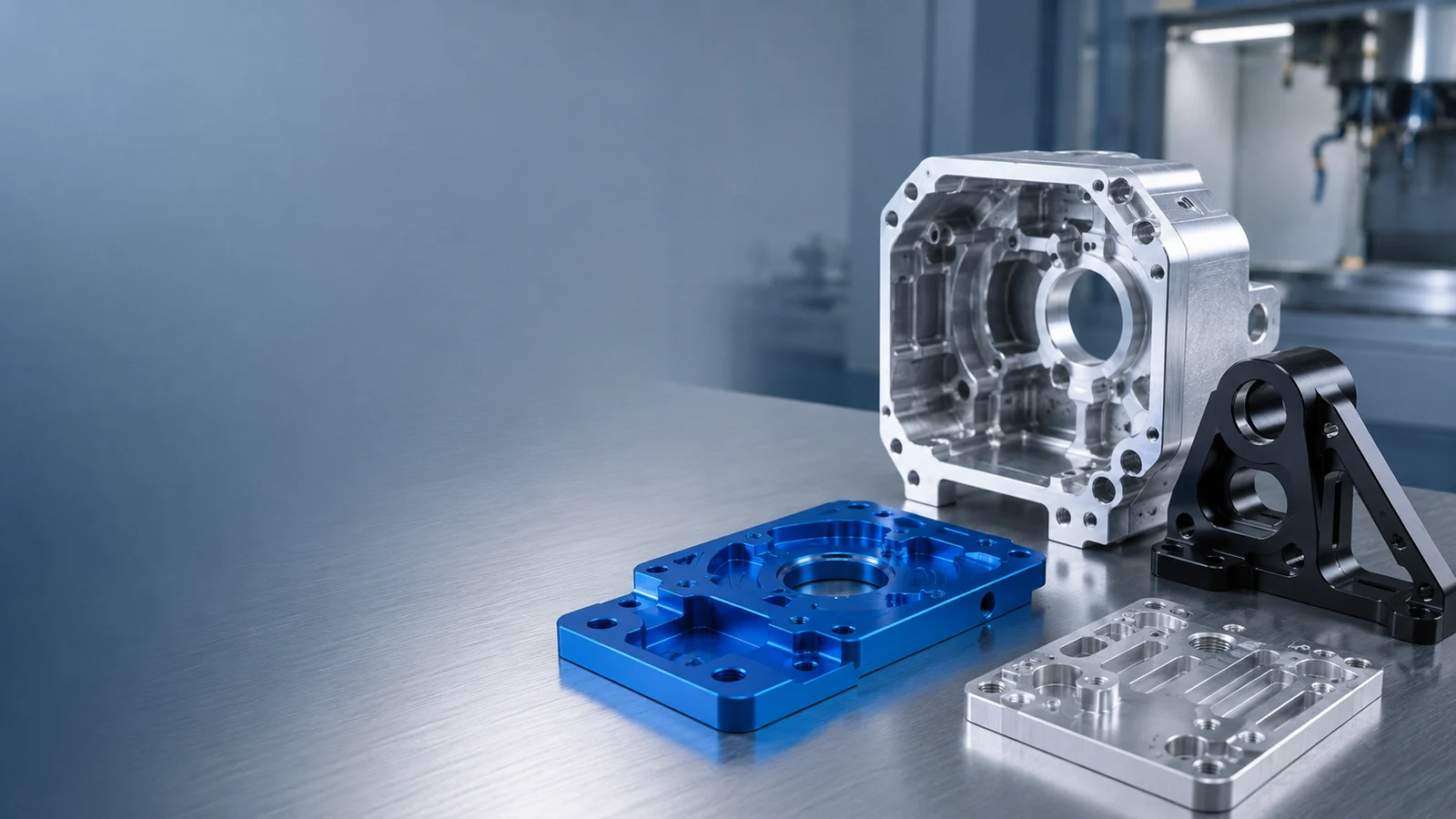
Anodizing is one of the most common surface treatments for aluminum CNC parts because it can improve corrosion resistance, wear behavior, electrical insulation, appearance, and color identification without covering the metal with a thick organic coating. It is widely used on electronics housings, optical mounts, robotic components, medical equipment, camera parts, automotive components, fixtures, instruments, and industrial machine parts.
However, anodizing is not automatically the best finish for every aluminum part. The process creates a controlled aluminum oxide layer that changes surface dimensions, friction, roughness, electrical contact, thread fit, sealing behavior, and cosmetic appearance. If the coating type, thickness, alloy, masking, and tolerances are not coordinated before production, a dimensionally correct machined part may fail after finishing.
RapidMFGPro evaluates anodized aluminum projects from a supplier-matching perspective. The review begins with the function of the coating, then considers the aluminum grade, temper, machining condition, anodizing type, color, thickness, masking, cosmetic standard, quantity, inspection method, and documentation. This helps match each project with suppliers whose machining and finishing capabilities fit the actual requirement.
This guide explains what anodizing is, when it should be used for aluminum CNC parts, when another finish may be more suitable, and how to design, specify, inspect, and source anodized parts.
When Should You Use Anodizing?
Anodizing is most useful when the aluminum surface needs more corrosion resistance, controlled wear behavior, electrical insulation, a decorative metallic appearance, or permanent color identification.
Corrosion Protection
Bare aluminum naturally forms a thin oxide film, but anodizing creates a thicker and more controlled oxide layer. This improves resistance to humidity, fingerprints, handling, and many atmospheric conditions.
Corrosion performance still depends on the alloy, coating thickness, sealing quality, surface defects, crevices, and exposure environment. Anodizing should not be treated as universal protection against every chemical or marine condition.
Wear Resistance
Hard anodizing can improve resistance to abrasion and sliding wear compared with bare aluminum. It is used on guides, housings, pistons, fixtures, machine components, and moving interfaces.
Wear life depends on coating thickness, alloy, sealing, lubrication, mating material, surface roughness, and contact pressure.
Electrical Insulation
Aluminum oxide is electrically insulating. Anodizing can prevent unwanted electrical contact between parts and provide a controlled insulating surface.
Grounding points, busbar contacts, bonding pads, and conductive interfaces normally require masking or post-anodize machining.
Cosmetic Appearance
Type II anodizing can create clear, black, red, blue, gold, and other finishes while maintaining a metallic appearance.
Color consistency depends on alloy, material lot, surface preparation, oxide thickness, dyeing, sealing, and viewing conditions.
| Part Requirement | Anodizing Suitability | Reason |
|---|---|---|
| Outdoor aluminum housing | High | Corrosion resistance and appearance can improve |
| Electrical grounding face | Low unless masked | Anodic oxide is electrically insulating |
| Sliding guide | High with hard anodizing | Surface wear resistance can improve |
| Temporary prototype fixture | Conditional | Finish may add cost without functional value |
| Color-coded instrument part | High | Dye anodizing supports identification |
| High-current contact surface | Low unless selectively removed | Oxide increases contact resistance |
When Is Anodizing Not the Best Choice?
Anodizing may be unnecessary or unsuitable when electrical conductivity, severe impact, thick color coverage, frequent rework, or mixed-alloy color matching controls the project.
Conductive Interfaces
Anodized surfaces do not provide reliable direct electrical contact. Grounding, EMI shielding, bonding, and current-carrying interfaces must remain conductive.
Selective masking, conductive hardware, post-machining, or metallic plating may be required.
Severe Impact
The anodic layer is hard but relatively brittle. Severe impact or edge deformation can crack the coating and expose the soft aluminum below.
A tougher coating system or a harder base material may be more suitable.
Frequent Design Rework
Anodizing complicates later welding, dimensional changes, and cosmetic repair.
Early prototypes may be left bare until the geometry is stable.
Uniform Opaque Color
Anodizing preserves the influence of the aluminum alloy and surface texture. If exact opaque color is more important than metallic appearance, paint or powder coating may be easier to control.
What Is Anodizing?
Anodizing is an electrochemical process that converts the aluminum surface into a controlled oxide layer. The aluminum part becomes the anode in an electrolytic cell.
Electrochemical Conversion
Electrical current drives oxygen-containing ions toward the aluminum surface, where aluminum oxide forms.
The coating is not deposited in the same way as paint or electroplating.
Integral Oxide Structure
The oxide grows from the original aluminum surface and is partly embedded into the substrate.
This integral structure gives anodizing strong adhesion when the surface is prepared correctly.
Porous Layer
Many anodizing processes create a porous oxide before sealing.
The pores can absorb dyes and then be closed or stabilized through sealing.
How Is Anodizing Different from Plating?
Anodizing and plating both modify the part surface, but they create different materials and functional behavior.
Material Source
Anodizing converts the aluminum surface into aluminum oxide.
Plating deposits another material, such as nickel, tin, copper, or silver, onto the surface.
Electrical Behavior
Anodic oxide is generally insulating.
Metallic plating is generally conductive.
Dimensional Buildup
Anodizing grows partly inward and partly outward from the original surface.
Plating mainly adds material outward.
Appearance
Anodizing usually preserves a metallic aluminum appearance.
Plating changes the surface to the color and character of the deposited metal.
How Is Anodizing Different from Painting?
Painting places an organic film over the aluminum, while anodizing creates an inorganic oxide layer from the aluminum itself.
Visual Result
Anodizing retains visible metal texture and machining characteristics.
Paint hides more of the substrate and provides opaque color.
Coating Thickness
Paint and powder coating normally create greater dimensional buildup than decorative anodizing.
This matters around threads, holes, press fits, and sealing surfaces.
Impact Response
Organic coatings may tolerate flexing and impact better.
Anodizing provides a harder surface but can crack on heavily deformed edges.
Color Uniformity
Paint can provide more consistent color across mixed alloys and surface conditions.
Anodized color is more sensitive to the aluminum material itself.
What Are the Main Types of Anodizing?
Aluminum anodizing is commonly divided into Type I, Type II, Type III, and specialty bonding or aerospace processes.
Type I Anodizing
Type I usually refers to chromic acid anodizing.
It creates a relatively thin coating and is used in aerospace and corrosion-sensitive applications.
Type II Anodizing
Type II usually refers to sulfuric acid anodizing.
It is the most common choice for clear, black, and colored decorative aluminum parts.
Type III Anodizing
Type III usually refers to hard anodizing.
It produces a thicker, harder layer for wear, abrasion, and functional service.
Specialty Anodizing
Phosphoric acid anodizing, boric-sulfuric acid anodizing, thin-film anodizing, and other systems are used for bonding, aerospace, electrical, and specialized corrosion requirements.
| Anodizing Type | Main Purpose | Typical Appearance | Main Design Concern |
|---|---|---|---|
| Type I | Thin corrosion protection | Light gray or natural | Process specification |
| Type II | General corrosion and decorative color | Clear or dyed | Color consistency |
| Type III | Wear resistance and durability | Gray, dark gray, or black | Dimensional buildup |
| Bonding anodize | Adhesive surface preparation | Minimal cosmetic emphasis | Storage and bonding sequence |
What Is Type II Anodizing?
Type II sulfuric acid anodizing is the standard choice for aluminum parts that need moderate protection, decorative color, or a clean metallic appearance.
Decorative Use
Type II can be left clear or dyed in many colors.
It is common on electronics housings, instrument components, optical mounts, consumer products, and machine parts.
Corrosion Resistance
Properly sealed Type II anodizing improves resistance to atmospheric exposure and handling.
Severe chemical or marine service still requires application-specific review.
Dimensional Change
Type II creates less buildup than hard anodizing but still affects bores, grooves, shafts, and threads.
Tight features may require masking or machining allowance.
What Is Type III Hard Anodizing?
Type III hard anodizing creates a thicker and harder oxide layer for wear, insulation, abrasion resistance, and demanding functional use.
Wear Performance
Hard anodizing improves surface hardness compared with bare aluminum.
The final wear result depends on alloy, thickness, sealing, lubrication, mating material, and contact pressure.
Dimensional Effect
The thicker coating has a greater effect on holes, threads, grooves, bearing seats, and sealing features.
The drawing should define whether dimensions apply before or after coating.
Color
Hard anodizing naturally develops gray to dark gray tones depending on alloy and thickness.
Bright decorative colors are less predictable than with Type II.
Edge Brittleness
Thick oxide is more vulnerable at sharp corners and thin fins.
Chamfers and radii improve coating continuity.
What Is Clear Anodizing?
Clear anodizing means the anodic layer is not intentionally dyed dark. The finished appearance still depends on alloy, thickness, surface preparation, and sealing.
Natural Metallic Appearance
Clear anodizing keeps a light metallic aluminum appearance.
It is common on laboratory, medical, industrial, and electronics components.
Shade Variation
Clear does not always mean completely colorless.
Some alloys appear gray, yellow, or slightly darker after anodizing.
Visible Surface Texture
Machining marks, grain direction, blasting, welds, and local defects remain visible.
Surface preparation should be specified when appearance matters.
What Is Black Anodizing?
Black anodizing is widely used for aluminum CNC parts that need a dark appearance, color consistency, or reduced visible reflection.
Dye Process
The porous oxide absorbs black dye before sealing.
Type II is commonly dyed black, while hard anodizing may already appear dark.
Optical Use
Black anodizing is common on camera parts, optical mounts, sensors, instruments, and equipment housings.
Standard black anodizing is not automatically a low-reflectance optical-black coating.
Shade Control
Black hides some color variation better than light colors, but gloss and tone can still vary.
Alloy, blasting, coating thickness, dyeing, and sealing influence the result.
How Does the Anodizing Process Work?
A typical anodizing process includes cleaning, pretreatment, electrochemical oxidation, dyeing when required, sealing, rinsing, drying, and inspection.
Cleaning
Oil, coolant, fingerprints, polishing compound, and contamination are removed.
Poor cleaning can create stains, pits, or uneven coating.
Etching
Chemical etching creates a more uniform matte surface and reduces some light machining marks.
Etching also changes dimensions and can reveal material variation.
Desmutting
Residues from alloying elements are removed after etching.
The treatment must match the alloy chemistry.
Electrolytic Oxidation
The part is connected as the anode and processed under controlled current, voltage, temperature, and time.
These parameters influence thickness and pore structure.
Dyeing
Decorative parts may be placed in a dye bath after anodizing.
Dye concentration, temperature, time, and oxide structure affect color.
Sealing
Sealing closes or stabilizes the porous oxide.
It improves corrosion resistance and dye retention but can change wear and electrical behavior.
Why Does Aluminum Grade Matter?
Aluminum alloys contain different amounts of magnesium, silicon, copper, zinc, manganese, iron, and other elements. These additions affect oxide formation and final appearance.
Alloying Elements
Alloying elements can remain in or near the oxide and change how light interacts with the surface.
This causes different colors and shades even under the same process.
Wrought Material
Wrought 5000-series and 6000-series alloys often produce more uniform decorative anodizing.
Their microstructure is generally more consistent than many cast alloys.
Cast Material
Cast aluminum often contains more silicon and a less uniform structure.
Anodized cast parts may appear gray, dark, or mottled.
Material Lot
Different heats, mills, extrusions, or material batches may develop different shades.
Cosmetic production should use controlled material lots when possible.
Which Aluminum Grades Anodize Well?
5000-series and 6000-series alloys are commonly selected when anodizing appearance and corrosion resistance are important.
6061 Aluminum
6061 is widely used for CNC machining and generally accepts clear, black, colored, and hard anodizing well.
It is common for housings, brackets, optical mounts, robotics, and industrial components.
6063 Aluminum
6063 is known for good extrusion finish and decorative anodizing response.
It is used for frames, profiles, visible enclosures, and architectural components.
5052 Aluminum
5052 provides good corrosion resistance and generally good anodizing performance.
It is common in sheet-metal enclosures, marine parts, covers, and formed products.
6082 Aluminum
6082 is widely used in structural and machined applications and can be anodized successfully.
Cosmetic appearance should still be verified for the selected stock.
Which Aluminum Grades Are More Difficult to Anodize?
Some aluminum grades can be anodized functionally but may not provide a uniform decorative result.
2024 Aluminum
2024 contains significant copper and may develop a darker or less uniform appearance.
It is widely used in aerospace where performance may be more important than decorative color.
7075 Aluminum
7075 can be anodized, but its color and coating response differ from 6061.
Hard anodizing requires controlled processing.
High-Silicon Castings
High-silicon cast aluminum can become dark gray or mottled.
Paint, powder coating, or plating may provide a more uniform appearance.
Mixed-Alloy Assemblies
Different aluminum alloys should not be expected to match after anodizing.
Cosmetic samples should use the same alloy and surface preparation as production.
| Aluminum Grade | Typical Response | Main Concern | Common Application |
|---|---|---|---|
| 5052 | Generally good | Sheet texture and forming marks | Enclosures and covers |
| 6061 | Good and widely used | Batch color variation | CNC housings and brackets |
| 6063 | Very good for decorative use | Extrusion lot consistency | Profiles and visible frames |
| 2024 | Functional but less decorative | Copper content and color | Aerospace parts |
| 7075 | Functional with process control | Color and coating consistency | High-strength parts |
| High-silicon casting alloy | Often dark or mottled | Cosmetic uniformity | Cast housings |
How Does Surface Preparation Affect Appearance?
Anodizing does not hide the original surface. Machining marks, scratches, blasting texture, polishing lines, welds, and material defects can remain visible.
As-Machined Surface
Tool marks remain visible after anodizing.
Consistent tools and toolpaths improve cosmetic repeatability.
Bead-Blasted Surface
Bead blasting creates a matte texture and reduces visible directional machining marks.
Media type, pressure, distance, and cleanliness affect the result.
Brushed Surface
Brushing creates directional grain.
Grain direction should be controlled across adjacent parts.
Polished Surface
Polishing can create a brighter anodized appearance.
Edge rounding and dimensional change should be controlled.
How Does Anodizing Change Dimensions?
Anodizing changes dimensions because the oxide grows partly into and partly above the original aluminum surface.
External Dimensions
Shafts, bosses, and external walls become slightly larger.
The amount depends on coating type and thickness.
Internal Dimensions
Bores, slots, and grooves become smaller.
Tight fits need coating allowance.
Thread Dimensions
Internal and external threads become tighter after anodizing.
Masking, oversize machining, chase tapping, or post-machining may be required.
Local Variation
Thickness can vary near edges, blind holes, deep recesses, and rack points.
Critical surfaces should be identified on the drawing.
How Should Tolerances Be Planned?
Tolerances should account for machining variation, coating growth, masking, inspection condition, and final assembly.
Pre-Anodize Size
The machine shop may use a pre-finish dimension that includes the expected coating allowance.
This manufacturing size should not replace the final product requirement.
Final Size
Critical mating dimensions should normally be accepted after anodizing.
The supplier must know the required finished range.
Selective Tight Tolerance
Tight tolerances should be limited to bearing, sealing, alignment, and assembly features.
General cosmetic surfaces can use broader limits.
Temperature Control
Aluminum expands with temperature.
Precision final inspection should occur under controlled conditions.
Which Features Should Be Masked?
Masking prevents anodizing on selected surfaces. It is used to preserve conductivity, dimensions, thread fit, sealing, or specific bonding requirements.
Electrical Contacts
Grounding pads, terminals, bonding faces, and current paths may need bare aluminum.
Masking boundaries should be dimensioned.
Precision Fits
Bearing seats, dowel holes, press fits, and close-tolerance bores may be masked.
Mask leakage and transition buildup should be considered.
Threads
Threads can be plugged or masked when coating would interfere with assembly.
Small blind threads are especially difficult to finish consistently.
Bonding Areas
Some adhesive systems require bare aluminum, while others require a specific bonding anodize.
The drawing should state the required surface condition.
How Should Masking Be Shown on the Drawing?
Masking instructions should be precise enough for the machine shop and anodizing supplier to interpret the same way.
Masking Boundaries
Use dimensions, section views, or identified surfaces.
A note such as mask critical areas is not sufficient.
Transition Zone
The edge between coated and uncoated areas may not be perfectly sharp.
The allowable transition should be defined where it affects function or appearance.
Plugged Holes
Hole depth, thread depth, countersink, and lead-in condition should be stated.
The supplier should know whether the hole entry must also remain bare.
Cosmetic Acceptance
Small anodizing marks inside masked areas may or may not be acceptable.
Functional and cosmetic criteria should be separated.
How Does Anodizing Affect Threads?
Anodizing changes thread dimensions, friction, electrical behavior, and edge condition.
Internal Threads
Coating reduces internal thread clearance.
Small and fine threads are more sensitive.
External Threads
External thread crests and flanks gain oxide thickness.
The coating can chip if the fit is too tight.
Thread Inserts
Inserts may be installed before or after anodizing.
The sequence depends on masking, appearance, grounding, and assembly needs.
Thread Inspection
Threads should normally be checked in the final finished condition.
Go/No-Go gauges or mating tests may be required.
How Does Anodizing Affect Surface Roughness?
Anodizing does not smooth a rough surface. It can increase measured roughness and make existing texture more visible.
Machined Surfaces
Tool marks remain part of the final surface.
A rough machined surface will remain rough after anodizing.
Hard-Anodized Surfaces
Thick hard anodizing can increase surface texture.
Sliding surfaces may require post-anodize grinding or lapping.
Sealing Surfaces
O-ring grooves and sealing faces need controlled roughness and final dimensions.
The requirement should apply after finishing when function depends on the coated surface.
How Does Anodizing Affect Electrical Performance?
The oxide layer is electrically insulating, which can be useful or harmful depending on the design.
Electrical Isolation
Anodizing can reduce direct electrical contact between aluminum parts.
It is useful for insulators and selected electronic structures.
Grounding Points
Grounding surfaces need bare metal, conductive inserts, star washers, or controlled oxide removal.
The electrical path should be shown clearly.
EMI Shielding
An anodized housing may not provide reliable conductive contact across seams.
Masked gasket lands, conductive coatings, or plated contact surfaces may be required.
How Does Anodizing Affect Thermal Performance?
Anodizing changes surface emissivity and interface resistance, while the bulk aluminum remains highly conductive.
Radiative Heat Transfer
Dark anodized surfaces can radiate heat more effectively than polished bare aluminum.
This may support passive heat rejection in selected designs.
Contact Heat Transfer
The oxide layer and surface roughness can reduce direct metal-to-metal thermal contact.
Thermal interface material and clamping pressure may be required.
Internal Heat Conduction
Anodizing does not significantly change the bulk conduction path through the aluminum.
The main effect is at the surface and mating interfaces.
How Does Anodizing Affect Adhesive Bonding?
Anodizing can improve or reduce adhesive bonding depending on process type, sealing, storage, and adhesive chemistry.
Bonding Anodize
Some anodizing systems are designed specifically for structural adhesive bonding.
They are not equivalent to sealed decorative anodizing.
Sealed Decorative Surfaces
Sealing changes the pore structure and may reduce adhesive penetration.
The adhesive supplier’s surface recommendation should be followed.
Storage Time
Contamination and surface aging can reduce bond quality.
Bonding may need to occur within a controlled period after pretreatment.
Why Does Anodized Color Vary?
Color variation is one of the most common anodizing concerns because the final shade depends on more than dye alone.
Alloy Variation
Different alloys absorb and reflect light differently.
Even nominally identical alloys can vary by batch.
Coating Thickness
Thickness changes pore volume, natural oxide tone, and dye response.
Hard anodizing is especially sensitive.
Surface Texture
Blasted, polished, brushed, and machined surfaces reflect light differently.
Texture variation may look like color variation.
Sealing Conditions
Sealing temperature, chemistry, time, and water quality can affect shade and dye retention.
Process consistency is essential for cosmetic batches.
How Should Color Be Specified?
Color names are useful for a general target, but critical cosmetic work needs a controlled sample and viewing method.
Color Name
Black, red, blue, or gold identifies a broad target.
It does not define exact shade, gloss, or saturation.
Approved Sample
A production-representative sample should use the same alloy, finish, and anodizing type.
Samples from a different material may be misleading.
Viewing Conditions
Lighting, angle, distance, and surrounding color influence appearance.
Cosmetic inspection should use controlled conditions.
Batch Matching
Parts assembled together should be processed in the same batch when possible.
Replacement parts may not match older anodized parts exactly.
What Common Anodizing Defects Occur?
Defects can come from the aluminum material, machining, cleaning, racking, chemical control, dyeing, sealing, handling, or packaging.
Color Variation
Parts may show different shades within one lot or between batches.
Material lot, surface preparation, thickness, dye, and sealing should be reviewed.
Stains
Rinsing, water quality, sealing, handling, or drying can leave stains.
Cosmetic acceptance should distinguish residue from permanent defects.
Burning
Excessive current density or poor electrical contact can create locally burned areas.
Racking and electrical control are critical.
Pitting
Contamination, alloy defects, aggressive cleaning, or pre-existing corrosion can produce pits.
The base aluminum should be inspected.
Rack Marks
Electrical contact points leave uncoated or differently colored marks.
Rack locations should be agreed for cosmetic parts.
Poor Sealing
Inadequate sealing reduces corrosion resistance and dye stability.
Seal-quality testing may be required.
Why Do Rack Marks Matter?
The anodizing process requires electrical contact between the part and a rack. The contact point cannot be fully anodized.
Electrical Contact
Poor contact can cause uneven coating or burning.
Sufficient pressure and clean contact are required.
Cosmetic Location
Rack marks should be placed on hidden, nonfunctional, or approved surfaces.
Small parts may have limited options.
Threaded Contact
Internal threads are sometimes used for racking.
The thread may remain partially uncoated.
Drawing Requirement
Critical cosmetic parts should identify acceptable rack areas.
The finishing supplier should review feasibility before production.
How Should Edges Be Designed?
Edge geometry affects coating continuity, chipping, wear, and appearance.
Sharp Outside Edges
Coating coverage is less robust on sharp outside corners.
The oxide can chip under impact.
Internal Corners
Tight internal corners are harder to clean and inspect.
Radii improve machining and finishing consistency.
Chamfers
Controlled chamfers reduce burrs and protect edges.
They should remain visible after finishing and handling.
Thin Fins
Thin fins can distort during machining and handling.
Hard anodizing may increase edge brittleness.
How Should Holes Be Designed?
Hole diameter, depth, venting, masking, and coating buildup influence the final result.
Blind Holes
Blind holes can trap process solution and rinse water.
Drainage and cleaning should be considered.
Small Holes
Small holes are sensitive to coating buildup and partial blockage.
Masking or post-anodize drilling may be required.
Cross Holes
Intersecting passages can trap chemicals and complicate rinsing.
Internal cleanliness should be included in the finishing review.
Press-Fit Holes
Press-fit diameters should be controlled in the final anodized condition.
Masking, machining allowance, or finish reaming may be necessary.
How Should Parts Be Machined Before Anodizing?
Machining strategy should account for coating allowance, cosmetic surfaces, masking, rack points, deburring, and post-anodize operations.
Toolpath Consistency
Cosmetic faces should use stable tools and consistent toolpaths.
Chatter and scratches remain visible after finishing.
Coating Allowance
Shafts, holes, slots, grooves, and threads should include expected dimensional change.
Thickness should be confirmed with the anodizing supplier.
Deburring
Burrs create thin, cracked, or irregular coating at edges.
Parts should be fully deburred before finishing.
Cleanable Fluids
Cutting fluid, polishing compound, ink, and silicone contamination must be removable.
Residue can create stains or adhesion problems.
Should Machining Occur After Anodizing?
Post-anodize machining is used when selected areas must remain conductive, precise, or free of oxide.
Grounding Faces
A grounding face can be machined after anodizing.
The exposed aluminum may need corrosion protection.
Precision Bores
Reaming, honing, or grinding can restore exact bore size.
These operations expose bare aluminum.
Thread Chasing
Threads may be chased when necessary.
This removes coating and can chip the edge.
Cosmetic Risk
Post-machining can scratch surrounding anodized surfaces.
Protective fixtures and careful handling are required.
How Is Anodizing Used on CNC-Milled Parts?
CNC-milled aluminum parts commonly use anodizing for housings, brackets, optical mounts, robotic components, fixtures, and instruments.
Deep Pockets
Deep pockets may show different texture because blasting and polishing access are limited.
Rinsing and drainage should reach all recesses.
Thin Walls
Thin walls can distort before or during finishing.
The oxide layer does not significantly increase structural stiffness.
Large Flat Faces
Large faces reveal machining variation, handling marks, and color differences easily.
Surface preparation and packaging require extra control.
Multi-Sided Cosmetic Parts
Parts visible from several sides need controlled rack placement and consistent surface preparation.
The cosmetic zones should be shown on the drawing.
How Is Anodizing Used on CNC-Turned Parts?
Turned aluminum parts include knobs, spacers, sleeves, optical barrels, connectors, and instrument components.
Threaded Features
Thread fit should be checked after anodizing.
Fine threads may need masking.
Concentric Fits
Bearing seats, mating diameters, and optical barrels need coating allowance.
Final runout and fit should be inspected after finishing.
Knurled Surfaces
Knurls can be anodized for appearance and grip.
Sharp peaks may show thin or damaged coating after use.
Cutoff Burrs
Parting burrs should be removed before anodizing.
Burrs create weak coating edges.
How Is Anodizing Used on Sheet-Metal Parts?
Sheet-metal enclosures, covers, brackets, panels, and guards are frequently anodized for corrosion resistance and appearance.
Bend Marks
Forming can leave witness marks, scratches, or local texture changes.
These remain visible after anodizing.
Cracking at Bends
Anodizing should usually occur after forming because bending an anodized sheet can crack the oxide.
Post-form anodizing produces a more continuous coating.
Welded Assemblies
Weld zones may anodize differently from the base sheet.
Cosmetic welded parts require sample approval.
Press-Fit Hardware
Inserts and hardware may be installed before or after anodizing.
The sequence depends on masking, electrical contact, and cosmetic requirements.
Which Surface Finish Should Be Chosen Before Anodizing?
The pre-anodize surface controls the final texture and visual quality.
As Machined
Suitable for functional parts where visible tool marks are acceptable.
It provides the lowest finishing cost.
Bead Blasted
Suitable for matte housings, optical parts, consumer products, and instruments.
Blasting should be consistent across all visible faces.
Brushed
Suitable for decorative panels and visible industrial equipment.
Grain direction must be controlled.
Polished
Suitable for bright decorative anodizing.
Polishing may change edges and dimensions.
How Is Anodizing Inspected?
Inspection should confirm appearance, thickness, color, sealing, corrosion performance, dimensions, masking, and functional requirements.
Visual Inspection
Visual checks look for stains, pits, scratches, shade variation, rack marks, burns, and incomplete coverage.
Cosmetic zones should have defined viewing conditions.
Thickness Measurement
Coating thickness can be measured by suitable nondestructive or cross-section methods.
The method should match the coating and part geometry.
Color Inspection
Color can be compared with an approved sample or measured instrumentally.
Visual and instrumental agreement should be defined for critical parts.
Seal Quality
Seal quality may be checked using applicable chemical, dye-stain, admittance, or corrosion methods.
The required test depends on the specification.
Dimensional Inspection
Critical dimensions, threads, bores, and fits should be checked after anodizing.
Masked and coated areas should be inspected separately.
What Should Be Specified on the Drawing?
A clear drawing prevents inconsistent anodizing quotations and finished-part variation.
Anodizing Type
State Type I, Type II, Type III, or another defined process.
Include the governing specification when required.
Color
State clear, black, or another color.
Critical cosmetic parts should reference an approved sample.
Thickness
State the required coating thickness or thickness range.
Functional and cosmetic surfaces may have different needs.
Sealing
State whether sealing is required and identify the accepted method when relevant.
Unsealed hard anodizing may be used for selected wear applications.
Masking
Show all surfaces that must remain bare.
Include acceptable transition zones.
Final Dimensions
State which dimensions apply after anodizing.
Critical fits should not be left open to interpretation.
What Should Be Included in the RFQ?
A complete RFQ helps suppliers quote the same alloy, machining scope, anodizing process, inspection, and delivery requirement.
Technical Files
Provide a 3D model and controlled 2D drawing.
The drawing defines acceptance.
Material Grade
State the exact aluminum alloy and temper.
Alloy substitution can change color and coating performance.
Quantity
State prototype quantity, first order, and annual demand.
Quantity affects racking, batch control, and cost.
Cosmetic Standard
Identify visible surfaces, viewing conditions, allowed rack marks, and approved color samples.
Cosmetic requirements should not be described only as good appearance.
Inspection Requirement
State thickness, color, sealing, corrosion, dimensional, thread, and certificate requirements.
Packaging Requirement
Anodized surfaces can scratch and show rub marks.
Parts may require individual wrapping or separated packaging.
How Does RapidMFGPro Evaluate Anodized Aluminum Projects?
RapidMFGPro evaluates anodized aluminum projects by connecting the functional requirement with the correct machining, anodizing, color-control, inspection, and supplier capabilities.
Application Review
The review begins with corrosion, wear, conductivity, appearance, temperature, and service environment.
This confirms whether anodizing is appropriate and which type should be considered.
Alloy Review
The aluminum grade, temper, product form, and material lot requirements are checked.
The review also considers whether the desired cosmetic result is realistic for the alloy.
Manufacturing Review
Machining allowance, edge geometry, threads, blind holes, cosmetic faces, masking, and rack locations are reviewed.
This reduces the risk of fit and appearance problems after finishing.
Supplier Matching
Suppliers are compared according to aluminum-machining experience, anodizing type, color control, hard-anodize capability, masking, batch capacity, metrology, and documentation.
A supplier suitable for black Type II housings may not be suitable for tightly controlled hard-anodized hydraulic components.
Quality Review
The review confirms material traceability, coating thickness, final dimensions, color, masking, seal quality, cosmetic inspection, and packaging.
The required scope should be agreed before production.
What Problems Commonly Occur?
Most anodizing problems are caused by unclear specifications, unsuitable alloy, poor surface preparation, uncontrolled dimensions, weak masking, or inconsistent color expectations.
Tight Threads
Coating buildup reduces thread clearance.
Masking or dimensional compensation may be needed.
Wrong Color
Color names without approved samples create subjective acceptance.
Alloy and surface preparation should match the reference.
Uneven Appearance
Tool marks, blasting variation, material lot, welds, and rack position can create visible differences.
Cosmetic surfaces need controlled preparation.
Coating Chips
Sharp edges, press fits, impacts, and tight threads can chip the oxide.
Geometry and assembly should be reviewed.
Masked Area Leakage
Anodizing can extend slightly into masked boundaries.
Functional areas need realistic transition allowances.
Scratches After Finishing
Anodized parts can be damaged during assembly, inspection, or shipping.
Protective handling and packaging are important.
Frequently Asked Questions
These questions address common decisions when specifying anodizing for aluminum CNC parts.
Does Anodizing Make Aluminum Harder?
Anodizing makes the surface harder, especially with Type III hard anodizing. It does not increase the bulk hardness or structural strength of the aluminum core.
Does Anodizing Prevent Corrosion?
It improves corrosion resistance, but performance depends on alloy, sealing, thickness, defects, and environment.
Can All Aluminum Be Anodized?
Most aluminum alloys can be anodized, but cosmetic appearance and coating quality vary significantly by grade.
Is Anodizing Conductive?
The anodic oxide is generally insulating. Conductive contact surfaces must remain bare or be modified after anodizing.
Can Anodized Aluminum Be Re-Anodized?
The old coating can sometimes be stripped and the part reprocessed, but stripping changes dimensions and may damage appearance.
Can Anodized Aluminum Be Welded?
The oxide interferes with welding and should be removed from the weld area. Welding is normally completed before anodizing.
Can Anodized Aluminum Be Painted?
Yes, but the surface preparation and sealing condition must match the paint system.
Does Hard Anodizing Eliminate Wear?
No. Hard anodizing improves wear resistance, but the coating can still crack, polish, or wear through under excessive load or poor lubrication.
Conclusion
Anodizing is suitable for aluminum CNC parts when corrosion resistance, wear performance, electrical insulation, metallic appearance, or color identification creates real functional value. Successful results depend on the aluminum alloy, anodizing type, thickness, sealing, surface preparation, masking, edge geometry, dimensional allowance, inspection, and packaging. Anodizing should not be selected automatically for conductive interfaces, severe impact, repeated rework, or mixed-alloy cosmetic matching. RapidMFGPro supports these projects by reviewing the requirement and matching it with suppliers whose machining, anodizing, color-control, masking, metrology, and quality capabilities fit the actual part.
Need Help Reviewing a Custom Part?
Share your CAD file and requirements to request supplier matching. Supplier capability and commercial terms must be verified before order placement.
Request Supplier Match