Time to read: 8 min
What Is Electroless Nickel Plating? When Is It Suitable for Precision CNC Parts?
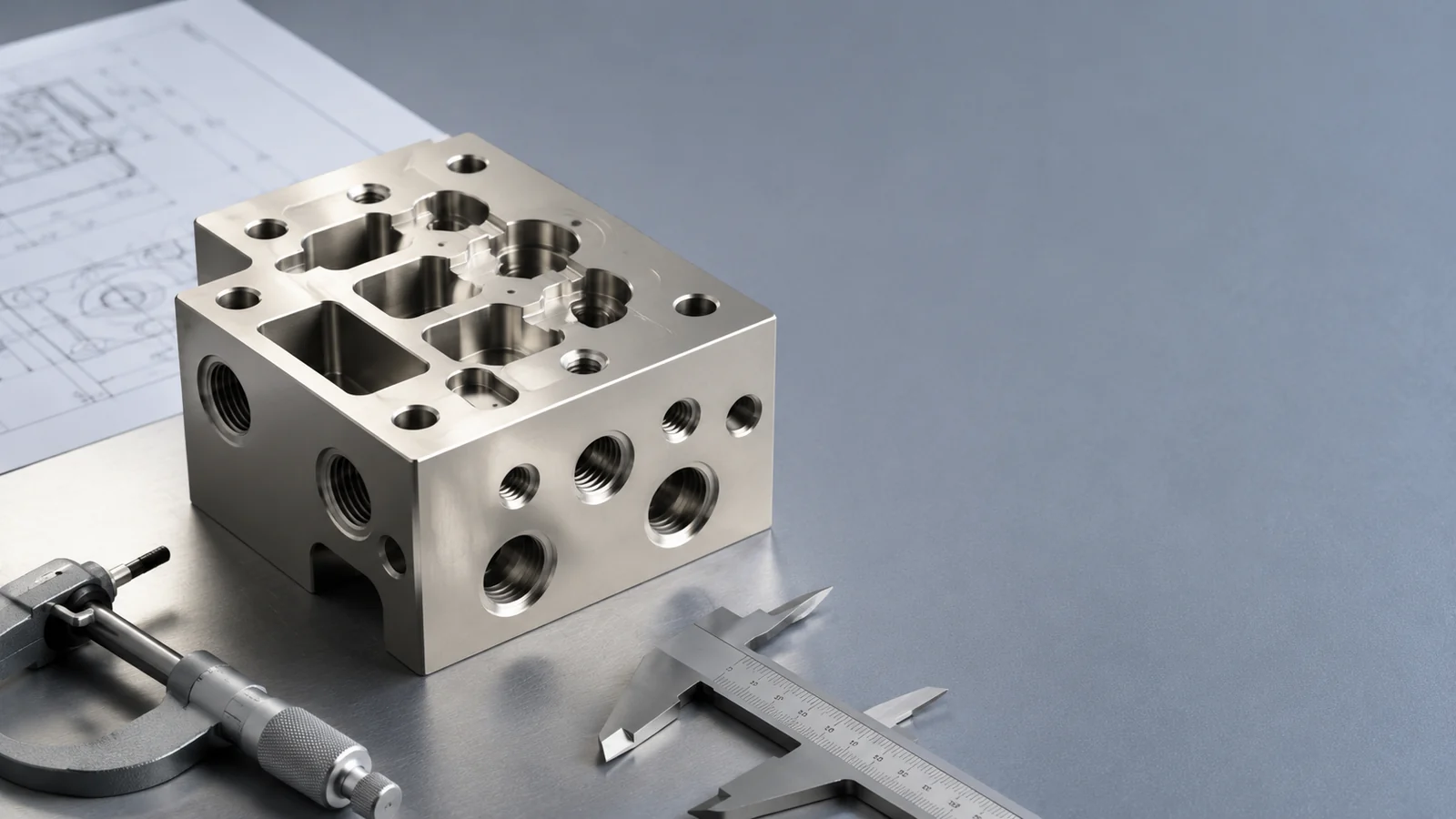
Electroless nickel plating is a chemical deposition process used to place a nickel-based coating on precision CNC parts without relying on external electrical current. It is widely used when a component needs uniform coating thickness, corrosion resistance, wear resistance, dimensional control, or a functional metallic surface on complex geometry.
The process is especially valuable for parts with deep recesses, internal passages, blind holes, threads, grooves, and complicated contours because the coating can deposit more uniformly than many conventional electroplated coatings. Steel, stainless steel, aluminum, copper alloys, and selected activated nonmetallic substrates can all receive electroless nickel when the pretreatment is suitable.
However, electroless nickel plating is not one single coating. Low-phosphorus, medium-phosphorus, high-phosphorus, electroless nickel-boron, composite, and heat-treated systems provide different hardness, corrosion resistance, solderability, magnetism, wear, and appearance. A coating chosen for severe wear may not provide the best corrosion protection, while a high-phosphorus coating selected for corrosion resistance may require different heat treatment and inspection.
RapidMFGPro evaluates electroless nickel projects from a supplier-matching perspective. The review begins with the part function, substrate, geometry, coating type, thickness, final dimensions, masking, heat treatment, quantity, testing, and documentation. This helps match each project with suppliers whose machining, pretreatment, plating, inspection, and quality systems fit the actual requirement.
This guide explains what electroless nickel plating is, when it is suitable for precision CNC parts, what design risks should be expected, and how to specify and inspect the finished coating.
When Is Electroless Nickel Suitable?
Electroless nickel is most suitable when the part requires a uniform metallic coating on complex geometry, improved corrosion resistance, controlled wear, or predictable dimensional buildup.
Complex Geometry
The coating can deposit on external faces, internal diameters, blind recesses, threads, grooves, and irregular contours without the current-density variation associated with electroplating.
This makes it useful for manifolds, valve bodies, housings, molds, shafts, gears, fixtures, and precision fluid components.
Controlled Thickness
Electroless deposition can provide relatively uniform thickness across complicated part surfaces.
The final result still depends on solution circulation, orientation, masking, pretreatment, bath condition, and geometry.
Corrosion Protection
Nickel-phosphorus coatings can improve resistance to moisture, process fluids, fuels, selected chemicals, and atmospheric exposure.
Corrosion performance depends on phosphorus content, coating thickness, porosity, base material, surface defects, heat treatment, and environment.
Wear Resistance
Electroless nickel provides a harder surface than many untreated aluminum, copper, and low-carbon steel substrates.
Heat treatment and composite particles can further change hardness and wear behavior.
| Part Requirement | Suitability | Reason |
|---|---|---|
| Complex manifold with internal passages | High | Uniform chemical deposition supports complex geometry |
| High-current electrical contact | Conditional | Nickel is conductive but may increase contact resistance |
| Precision aluminum housing | High | Corrosion and wear can improve with controlled buildup |
| Flexible spring part | Conditional | Coating may crack if the substrate bends severely |
| Low-cost temporary fixture | Low to conditional | Coating may add unnecessary cost |
| Severe abrasive wear surface | Conditional | Composite coating or a harder material may be required |
When Is Electroless Nickel Not the First Choice?
Electroless nickel may be unnecessary or unsuitable when the coating cannot tolerate the mechanical loading, when conductivity must remain extremely high, or when another process provides lower cost or better environmental performance.
Severe Bending
A hard nickel-based coating can crack when applied to a component that flexes or bends significantly.
Thin springs, clips, diaphragms, and repeatedly flexed parts need coating-ductility review.
Maximum Electrical Conductivity
Electroless nickel is conductive, but its conductivity is lower than copper, silver, and some other metallic contact surfaces.
High-current joints may use silver, tin, or a selectively plated system instead.
Very Thick Dimensional Restoration
Electroless nickel can build thickness, but large dimensional repair may become expensive and difficult to control.
Welding, thermal spray, machining, or replacement may be more practical.
Purely Decorative Color
Electroless nickel produces a metallic gray to bright nickel appearance.
Paint, powder coating, anodizing, or decorative electroplating may provide broader color choices.
What Is Electroless Nickel Plating?
Electroless nickel plating is an autocatalytic chemical reduction process. Nickel ions are reduced from solution and deposited onto an activated surface.
Autocatalytic Deposition
Once deposition begins, the growing nickel surface catalyzes further deposition.
The process continues while bath chemistry, temperature, and surface activity remain controlled.
No External Current
The process does not depend on the part carrying electrical current from an external power supply.
This is the main reason thickness can remain more uniform on complex geometry.
Nickel Alloy Coating
The deposited layer usually contains nickel plus phosphorus or boron.
The alloy content changes hardness, corrosion, magnetism, solderability, and heat-treatment response.
How Is It Different from Electroplated Nickel?
Electroless nickel and electroplated nickel both use nickel-based coatings, but the deposition mechanism and thickness distribution are different.
Current Distribution
Electroplating depends on electrical current density.
Edges and exposed areas can receive more deposit than deep recesses and shielded surfaces.
Thickness Uniformity
Electroless nickel can coat complex geometry more uniformly.
It is often preferred when dimensional buildup must remain consistent around the part.
Coating Composition
Electroplated nickel is generally closer to pure nickel.
Electroless nickel is usually a nickel-phosphorus or nickel-boron alloy.
Appearance
Electroplated nickel may provide a brighter decorative finish.
Electroless nickel is usually selected for functional rather than purely decorative performance.
What Are the Main Electroless Nickel Types?
Electroless nickel coatings are commonly grouped by phosphorus content or by the use of boron and composite particles.
Low-Phosphorus Nickel
Low-phosphorus electroless nickel generally provides higher as-deposited hardness and useful wear resistance.
Corrosion performance and magnetism differ from higher-phosphorus coatings.
Medium-Phosphorus Nickel
Medium-phosphorus electroless nickel provides a balanced combination of hardness, corrosion resistance, cost, and broad process availability.
It is one of the most common choices for general precision parts.
High-Phosphorus Nickel
High-phosphorus electroless nickel is selected for corrosion resistance and lower magnetic response in the as-deposited condition.
Heat treatment changes both hardness and microstructure.
Nickel-Boron
Electroless nickel-boron can provide high hardness, wear resistance, and solderability.
It is used for specialized tooling, electronics, and moving components.
Composite Electroless Nickel
Composite coatings incorporate particles such as PTFE, silicon carbide, or diamond into the nickel matrix.
These particles can reduce friction or improve wear.
| Coating System | Main Benefit | Main Limitation | Typical Use |
|---|---|---|---|
| Low phosphorus | High as-deposited hardness | Lower corrosion performance in some environments | Wear parts and tooling |
| Medium phosphorus | Balanced general performance | Not optimized for one extreme property | General CNC components |
| High phosphorus | Corrosion resistance and low magnetic response | Different heat-treatment behavior | Chemical and electronics parts |
| Nickel-boron | Hardness and solderability | Higher process cost | Tools and electrical parts |
| Nickel-PTFE | Low friction | Lower maximum hardness | Sliding components |
| Nickel-SiC | Abrasive wear resistance | More difficult finishing | Wear surfaces |
What Is Low-Phosphorus Electroless Nickel?
Low-phosphorus electroless nickel is used when hardness, wear, and resistance to selected alkaline environments are important.
As-Deposited Hardness
Low-phosphorus coatings are generally harder in the as-deposited condition than higher-phosphorus systems.
This can reduce or eliminate the need for post-plating heat treatment in selected applications.
Wear Applications
The coating is used on tooling, guides, valve parts, and sliding components.
Lubrication, mating material, and surface finish still control wear life.
Corrosion Limitation
Low-phosphorus coatings may not provide the best barrier corrosion resistance in every environment.
Corrosion testing should match the service fluid.
What Is Medium-Phosphorus Electroless Nickel?
Medium-phosphorus electroless nickel is the standard general-purpose system for many precision CNC parts.
Balanced Properties
It provides a practical combination of hardness, corrosion resistance, uniformity, and process stability.
It is used on aluminum, steel, copper alloys, and other activated substrates.
Broad Availability
Many plating suppliers are equipped to provide medium-phosphorus coatings.
Availability can reduce lead time and qualification cost.
General Applications
Housings, shafts, molds, fixtures, manifolds, valves, and machine components commonly use this system.
The final specification should still define thickness and post-treatment.
What Is High-Phosphorus Electroless Nickel?
High-phosphorus electroless nickel is selected when barrier corrosion resistance and lower as-deposited magnetic response are important.
Corrosion Performance
A more amorphous coating structure can reduce through-paths for corrosive media.
Coating continuity and porosity remain important.
Magnetic Behavior
High-phosphorus coatings can be essentially nonmagnetic in the as-deposited condition.
Heat treatment may change the magnetic response.
Chemical Applications
High-phosphorus coatings are used on valves, pumps, fluid components, electronics, and chemical equipment.
Compatibility should be verified for the exact fluid and temperature.
What Is Electroless Nickel-Boron?
Electroless nickel-boron is a nickel alloy coating that uses boron rather than phosphorus as the primary alloying addition.
Hardness
Nickel-boron can provide high hardness in the as-deposited condition.
Heat treatment can further change performance.
Wear Resistance
The coating is used for tooling, molds, moving components, and selected aerospace or industrial parts.
Surface finish and lubrication remain important.
Solderability
Nickel-boron can provide useful solderability for selected electrical applications.
Storage, oxidation, and cleaning should be controlled.
What Are Composite Electroless Nickel Coatings?
Composite electroless nickel coatings suspend functional particles in the plating bath and incorporate them into the growing nickel matrix.
Nickel-PTFE
PTFE particles reduce surface friction and support dry-sliding applications.
The coating is used on guides, valves, molds, and release surfaces.
Nickel-Silicon Carbide
Silicon carbide particles improve abrasion resistance.
The coating is used on cylinders, wear surfaces, and demanding machine components.
Nickel-Diamond
Diamond particles can create a very abrasive or wear-resistant surface.
Grinding, lapping, and mating-part wear require careful control.
How Does the Plating Process Work?
A typical electroless nickel process includes cleaning, activation, deposition, rinsing, drying, optional heat treatment, and final inspection.
Cleaning
Oil, coolant, polishing compound, oxide, and contamination are removed.
Poor cleaning causes blistering, skips, pits, and adhesion failure.
Surface Activation
The substrate is chemically prepared so nickel deposition can begin.
Aluminum, stainless steel, copper, and steel require different activation sequences.
Autocatalytic Deposition
The part is immersed in the controlled plating bath until the required thickness is reached.
Bath chemistry, temperature, agitation, loading, and time determine the result.
Rinsing and Drying
Residual chemicals are removed and the part is dried without staining.
Internal passages and blind holes need special attention.
Post-Plating Heat Treatment
Heat treatment may improve hardness, adhesion, or hydrogen relief depending on the substrate and specification.
It can also change dimensions, corrosion resistance, and magnetism.
Why Is Pretreatment Critical?
Electroless nickel adhesion depends strongly on the chemical and physical condition of the substrate.
Oxide Removal
Aluminum, stainless steel, and other metals form oxides that can prevent deposition.
The pretreatment must remove or modify the oxide without damaging the base material.
Contamination Removal
Silicone, cutting fluid, sulfur compounds, fingerprints, and polishing residue can interfere with plating.
Clean handling before finishing is important.
Surface Activation
Some substrates require strike layers or catalytic activation.
The sequence should match the substrate and final service.
Surface Damage
Aggressive cleaning can etch edges, enlarge pits, or change dimensions.
Pretreatment should be included in tolerance planning.
Which Substrates Can Be Plated?
Electroless nickel can be applied to many metals and selected activated nonmetallic materials, but the pretreatment and adhesion risks differ.
Carbon Steel
Carbon steel is commonly plated for corrosion and wear protection.
Rust, scale, heat treatment, and hydrogen embrittlement risk should be controlled.
Stainless Steel
Stainless steel requires activation because its passive oxide resists direct deposition.
A suitable strike or activation process is often used.
Aluminum
Aluminum requires specialized pretreatment, commonly including oxide removal and a zincate-based sequence.
Alloy composition strongly affects adhesion and appearance.
Copper and Brass
Copper alloys can be plated for wear, diffusion control, corrosion, and appearance.
Surface oxide, leaded phases, and dezincification-sensitive cleaning require attention.
Engineering Plastics
Selected plastics can be metallized after etching and catalytic activation.
Adhesion, thermal expansion, and part flexibility limit performance.
| Substrate | Main Benefit | Main Pretreatment Concern | Typical Part |
|---|---|---|---|
| Carbon steel | Corrosion and wear protection | Rust and hydrogen control | Shaft or fixture |
| Stainless steel | Wear and functional surface | Passive-film activation | Valve component |
| Aluminum | Hard metallic surface | Oxide removal and zincate control | Housing or manifold |
| Copper or brass | Barrier and wear surface | Oxide and alloy chemistry | Connector or mold insert |
| Activated plastic | Metallic functional surface | Adhesion and expansion mismatch | Electronic component |
How Is Aluminum Electroless Nickel Plated?
Aluminum is one of the most common electroless nickel substrates for precision CNC parts, but it requires careful pretreatment because aluminum oxide forms rapidly.
Alloy Identification
6061, 7075, 2024, cast aluminum, and high-silicon alloys do not respond identically.
The exact aluminum grade should be confirmed before processing.
Zincate Pretreatment
A zincate-based pretreatment replaces the aluminum oxide with a thin zinc-rich layer that supports nickel deposition.
Single and double zincate sequences may be used depending on the alloy and requirement.
Adhesion Risk
Poor cleaning, alloy segregation, trapped solution, or incorrect activation can cause blistering and peeling.
Cast and high-copper aluminum grades require closer control.
Dimensional Planning
Electroless nickel builds outward on all plated surfaces.
Holes, threads, sealing faces, and press fits should include the expected buildup.
How Is Steel Electroless Nickel Plated?
Steel parts are plated to improve corrosion resistance, wear, release behavior, and dimensional life.
Surface Cleaning
Rust, oxide, oil, and scale must be removed.
Aggressive cleaning should not damage precision features.
Hydrogen Risk
Cleaning and plating can introduce hydrogen into high-strength steel.
Baking or controlled processing may be required.
Heat-Treated Steel
Hardened steels need review for tempering temperature, distortion, and coating adhesion.
Post-plating heat treatment must not reduce base-material hardness.
How Is Stainless Steel Electroless Nickel Plated?
Stainless steel can receive electroless nickel when the passive surface is properly activated.
Passive Film
Chromium-rich oxide prevents spontaneous deposition.
Surface activation or a nickel strike is commonly required.
Adhesion Control
Delays between activation and plating can allow the passive film to reform.
The process sequence should minimize exposure.
Functional Reason
Stainless steel may be plated for wear, friction, solderability, or a uniform surface rather than basic corrosion alone.
The additional coating should provide a clear performance benefit.
How Does Coating Thickness Affect the Part?
Electroless nickel thickness controls barrier protection, wear life, dimensional buildup, cost, and processing time.
Thin Coatings
Thin coatings are used for mild corrosion, solderability, appearance, or minimal dimensional change.
They may not fully cover substrate porosity or machining defects.
Medium Coatings
Medium thickness is common for general corrosion and wear.
It provides a balance between function and cost.
Thick Coatings
Thick coatings are used for severe wear, corrosion, or dimensional restoration.
Internal stress, cracking, edge buildup, and cost require closer control.
Final Dimensions
Every plated surface grows outward.
Diameters, holes, grooves, and threads should be calculated in the finished condition.
How Uniform Is Electroless Nickel?
Electroless nickel is known for uniformity, but perfectly identical thickness on every surface should not be assumed.
Solution Access
Fresh solution must reach the entire surface.
Deep blind holes and narrow passages can plate differently if circulation is limited.
Gas Release
Gas bubbles can block local deposition.
Part orientation and agitation help release trapped gas.
Bath Loading
Excessive part loading can change local chemistry and deposition rate.
Batch size should match bath capacity.
Edge Effects
Electroless nickel has less edge buildup than electroplating.
Sharp corners can still show stress, roughness, or different appearance.
How Should Tolerances Be Planned?
Precision parts need a clear distinction between pre-plate machining dimensions and final plated dimensions.
Machining Allowance
The machine shop can undersize external features and oversize internal features to allow for coating.
The allowance should match the specified thickness.
Finished Dimension
Bearing seats, sealing bores, shafts, threads, and mating faces should be accepted after plating.
The drawing should state the final requirement.
Selective Tight Tolerance
Tight tolerances should be limited to functional features.
General surfaces can use broader limits.
Post-Plate Finishing
Grinding, lapping, polishing, or honing can restore precision after plating.
Sufficient coating thickness must remain after finishing.
Which Features Should Be Masked?
Masking prevents nickel deposition on surfaces where coating would interfere with fit, conductivity, welding, or assembly.
Threads
Fine or close-tolerance threads may need plugs or masking.
Final gauging should occur after plating.
Electrical Contacts
Some contacts need bare copper, aluminum, silver, or another surface.
Selective plating and masking should be defined.
Press Fits
Bearing bores, dowel holes, and press-fit shafts may be masked or machined with allowance.
The final fit should be verified.
Weld Areas
Nickel coating may interfere with later welding.
Welding is normally completed before plating or the weld area is masked.
How Should Masking Be Specified?
Masking instructions should define exact surfaces, transition zones, and acceptable contact marks.
Boundary Dimensions
Masking limits should be shown with dimensions or identified surfaces.
General notes create inconsistent interpretation.
Transition Zone
The coating edge may not be perfectly sharp.
Functional designs should allow a realistic transition.
Plugged Holes
Hole entry, depth, countersink, and thread length should be defined.
The supplier needs to know which area must remain unplated.
Masking Material
Plugs, tapes, lacquers, and fixtures serve different temperatures and chemistries.
Residue and edge quality should be inspected.
How Does Electroless Nickel Affect Threads?
Coating buildup changes thread pitch diameter, flank clearance, friction, and assembly torque.
Internal Threads
Nickel buildup reduces internal thread clearance.
Fine threads are more sensitive than coarse threads.
External Threads
External thread flanks gain thickness and can bind in the mating part.
Pre-plate compensation or masking may be needed.
Thread Gauging
Go/No-Go gauges should normally be used in the final plated condition.
Coating roughness and burrs can affect the result.
Assembly Friction
Nickel changes friction compared with bare aluminum, brass, or steel.
Assembly torque should be validated.
How Does It Affect Surface Roughness?
Electroless nickel follows the underlying surface and can reproduce machining marks, pits, scratches, and porosity.
As-Machined Surfaces
Tool marks remain visible under the coating.
A smoother pre-plate finish produces a smoother final result.
Thick Coatings
Thick deposit can reduce some minor texture but does not automatically level deep defects.
High thickness may also increase nodules and roughness.
Post-Plate Polishing
Polishing or lapping can reduce roughness and create a bright surface.
Remaining coating thickness should be verified.
How Does It Affect Hardness?
Electroless nickel creates a hard surface layer, while the base material retains its original bulk properties.
As-Deposited Hardness
Hardness depends on phosphorus or boron content and bath condition.
Low-phosphorus and nickel-boron systems are generally harder as deposited.
Heat-Treated Hardness
Controlled heat treatment forms hard nickel-phosphide phases and increases hardness.
The exact cycle should match the coating and substrate.
Substrate Support
A hard coating cannot carry unlimited load over a soft substrate.
High contact pressure can deform aluminum or copper beneath the nickel.
How Does Heat Treatment Change the Coating?
Post-plating heat treatment can increase hardness, improve adhesion, relieve hydrogen, and change corrosion or magnetic behavior.
Hardness Increase
Heat treatment causes structural changes that raise coating hardness.
Wear resistance can improve in selected applications.
Adhesion Improvement
Low-temperature heat treatment can improve adhesion on some aluminum and non-ferrous substrates.
The cycle should not damage the base material.
Corrosion Change
Crystallization and microcracking can reduce barrier corrosion performance.
Maximum hardness and maximum corrosion resistance may require different conditions.
Magnetic Change
High-phosphorus coatings can become more magnetic after heat treatment.
Magnetic requirements should be stated in the final condition.
What Is Hydrogen Embrittlement?
Hydrogen embrittlement is a risk for high-strength steel when hydrogen enters the material during cleaning, activation, plating, or corrosion.
High-Strength Steel Risk
Hardened fasteners, springs, gears, and aerospace parts are more sensitive than low-strength steel.
The material hardness and stress level should be reviewed.
Hydrogen Entry
Acid cleaning and electrochemical reactions can introduce hydrogen.
Process selection should minimize exposure.
Relief Baking
Controlled baking after plating may reduce trapped hydrogen.
Time between plating and baking can be critical.
Design Implication
A coating specification for high-strength steel should include the required embrittlement-control process.
General plating notes may be insufficient.
How Does It Affect Corrosion Resistance?
Electroless nickel acts primarily as a barrier coating. Corrosion resistance depends on coating continuity, thickness, composition, defects, and exposure.
Barrier Protection
The coating separates the substrate from the environment.
Pores and cracks allow corrosive media to reach the base metal.
Phosphorus Content
High-phosphorus coatings generally provide stronger barrier corrosion performance.
The exact environment still controls suitability.
Edge Protection
Sharp corners, threads, and damaged edges can become corrosion initiation points.
Edge design and handling are important.
Galvanic Effects
Exposed substrate next to nickel can create galvanic corrosion in wet service.
Complete coverage and damage control are important on aluminum and steel.
How Does It Affect Wear and Friction?
Electroless nickel can improve wear, but the result depends on hardness, roughness, load, lubrication, mating material, and particle reinforcement.
Sliding Wear
Nickel-phosphorus coatings are used on shafts, guides, valves, and moving components.
Lubrication and surface finish affect wear life.
Abrasive Wear
Silicon carbide and diamond composite coatings improve resistance to abrasive particles.
The harder surface may increase wear on the mating part.
Low-Friction Coatings
Nickel-PTFE reduces friction and supports release applications.
It is not the hardest electroless nickel system.
Contact Pressure
The substrate must support the coating.
Excessive pressure can crack the coating or deform the base part.
How Does It Affect Electrical Performance?
Electroless nickel is electrically conductive, but it changes contact resistance and magnetic behavior.
Conductive Surface
Nickel provides a metallic conductive layer.
It can support grounding and shielding when contact pressure and cleanliness are controlled.
Contact Resistance
Nickel is less conductive than copper and silver.
High-current contacts may require selective silver or tin plating.
Solderability
Fresh electroless nickel can support soldering in selected systems.
Oxidation, phosphorus content, storage, flux, and underlayer affect results.
Magnetic Requirement
Low- and medium-phosphorus coatings are more magnetic than high-phosphorus coatings.
Heat treatment changes the response.
How Does It Affect Thermal Performance?
Electroless nickel has lower thermal conductivity than aluminum and copper, but the coating is thin compared with the bulk part.
Bulk Heat Flow
The substrate remains the main thermal path.
A thin nickel layer normally has limited effect on total conduction through a thick aluminum part.
Interface Resistance
Coating roughness, flatness, oxide, and contact pressure affect thermal interfaces.
Thermal interface material may still be required.
Heat-Treatment Exposure
Post-plating heat treatment can change aluminum temper or relieve machining stress.
The complete material system should be reviewed.
How Should Edges Be Designed?
Edge geometry affects coating continuity, stress, chipping, and inspection.
Sharp Outside Corners
Sharp edges can create stress concentration and rough deposit.
Small chamfers or radii improve durability.
Internal Corners
Tight internal corners are harder to clean and inspect.
Radii improve machining and solution access.
Knife Edges
Thin edges can receive irregular buildup and may crack during handling.
They should be avoided where possible.
Deburring
Burrs become coated and can remain sharp.
Parts should be fully deburred before plating.
How Should Holes and Passages Be Designed?
Electroless nickel can coat internal geometry, but trapped gas, limited circulation, and incomplete rinsing can still create problems.
Blind Holes
Blind holes can trap gas and process solution.
Orientation and agitation should support circulation.
Small-Diameter Passages
Narrow passages may plate at a different rate if fresh solution cannot circulate.
Minimum diameter and aspect ratio should be reviewed with the plating supplier.
Cross-Drilled Passages
Intersecting holes can trap chemicals and complicate rinsing.
Internal cleanliness should be inspected.
Vent and Drain Features
Venting reduces trapped gas.
Drainage reduces residue after rinsing.
How Should Parts Be Machined Before Plating?
Machining should provide final geometry, clean surfaces, coating allowance, and accessible areas for masking and inspection.
Surface Finish
The coating reproduces the underlying texture.
Sealing and sliding surfaces should be machined to the required pre-plate roughness.
Tool Marks
Deep tool marks remain visible and can become corrosion paths if coverage is thin.
Cosmetic and sealing faces need controlled machining.
Coating Allowance
External features should be machined undersize and internal features oversize where needed.
The allowance should match final thickness.
Contamination Control
Silicone, sulfurized oil, polishing compound, and marker ink can interfere with pretreatment.
Cleanable manufacturing fluids should be used.
Should Machining Occur After Plating?
Post-plate machining is used when exact dimensions, roughness, or uncoated contact surfaces are required.
Grinding
Grinding can restore shaft, bore, and sealing dimensions.
Remaining coating thickness should be verified.
Lapping
Lapping creates low roughness and controlled flatness.
It is used for valves, seals, molds, and precision faces.
Thread Chasing
Threads may be chased after plating.
This removes coating and can expose the substrate.
Selective Material Removal
Grounding pads or press-fit surfaces can be machined bare.
Exposed areas may need additional corrosion protection.
How Is It Used on CNC-Milled Parts?
CNC-milled parts commonly use electroless nickel for housings, manifolds, molds, fixtures, valve bodies, and precision structures.
Deep Pockets
Deep pockets benefit from more uniform chemical deposition than conventional electroplating.
Solution circulation still needs review.
Large Flat Faces
Large faces reveal scratches, pits, and waviness.
Machining and handling should protect cosmetic areas.
Thin Walls
Thin aluminum walls can distort during pretreatment and heat treatment.
The coating does not significantly increase structural stiffness.
Sealing Grooves
O-ring grooves require final dimensions and smooth coating.
Burrs and nodules can damage seals.
How Is It Used on CNC-Turned Parts?
Turned shafts, sleeves, valve stems, rollers, connectors, and bushings use electroless nickel for wear, corrosion, and dimensional life.
Shaft Diameters
Coating buildup increases diameter.
Final grinding may be used for bearing fits.
Internal Bores
Bores can receive relatively uniform deposit.
Solution flow and final size should be controlled.
Threaded Features
Thread dimensions should be compensated or masked.
Final gauging is required.
Runout
Coating uniformity helps preserve concentricity.
Straightness and runout should be inspected after plating and heat treatment.
How Is It Used on Molds and Tooling?
Electroless nickel is used on molds, dies, fixtures, and tooling for wear resistance, release behavior, corrosion protection, and surface restoration.
Injection Molds
Nickel protects cooling passages, cavities, and mold surfaces from corrosion and wear.
Polish and release requirements determine the coating system.
Composite Molds
Nickel-PTFE can improve release in selected molding applications.
Temperature and mold-cleaning chemicals should be checked.
Dimensional Repair
Worn tooling can be plated oversize and reground.
Adhesion and remaining substrate condition should be verified.
Corrosion Protection
Cooling water and humid storage can corrode steel tooling.
Complete passage coverage is important.
How Is It Used on Fluid Components?
Pumps, valves, manifolds, fittings, and hydraulic components use electroless nickel for barrier corrosion, wear, and uniform internal coverage.
Valve Bodies
Internal passages and sealing surfaces benefit from uniform coating.
Fluid compatibility and porosity should be reviewed.
Pump Components
Shafts, housings, and impellers may use nickel for corrosion and erosion resistance.
Severe cavitation may require a different material or coating.
Hydraulic Parts
Spools, bores, and manifolds need controlled thickness and low roughness.
Final cleaning is critical.
Leak Testing
Plating does not automatically seal casting porosity or cracks.
Pressure and leak testing may be required after finishing.
How Is It Used on Electrical Parts?
Electroless nickel is used as a conductive barrier, diffusion layer, solderable surface, and corrosion-resistant finish.
Connector Components
Nickel can protect copper and brass from oxidation.
Contact resistance may require a gold, tin, or silver top layer.
Electronic Housings
Plated aluminum housings can provide conductive shielding and corrosion resistance.
Seams and fastener contact areas should be designed for electrical continuity.
Diffusion Barrier
Nickel limits copper migration into gold, solder, and other surface systems.
Thickness and porosity should be controlled.
Soldering Surfaces
Electroless nickel may be used under gold or as part of a solderable stack.
Storage and oxidation affect solderability.
How Is It Used in Aerospace Parts?
Aerospace parts use electroless nickel for wear, corrosion, dimensional restoration, electrical function, and complex internal coverage.
Material Traceability
The base alloy, heat number, processing lot, and coating records may require traceability.
Substitution should require approval.
Hydrogen Control
High-strength steel parts require strict embrittlement-control procedures.
Baking and process timing may be documented.
Specification Compliance
Aerospace drawings may reference AMS, ASTM, military, or customer-specific requirements.
The supplier must be qualified for the exact specification.
Nondestructive Testing
Base-material crack inspection may be required before and after processing.
Coating defects can hide substrate damage.
How Is It Used in Medical Equipment?
Medical equipment uses electroless nickel on fixtures, housings, instruments, fluid parts, and precision mechanisms.
Cleaning Resistance
The coating may improve resistance to repeated cleaning and handling.
The exact disinfectant and sterilization method should be reviewed.
Biocompatibility
Electroless nickel should not be assumed biocompatible for implanted or patient-contact use.
Application-specific testing and regulatory review are required.
Nickel Sensitivity
Nickel exposure can be restricted in skin-contact and medical applications.
Top coatings or another material may be required.
Cleanliness
Residue, trapped solution, and particles must be controlled.
Packaging and cleaning validation may be required.
How Is It Inspected?
Inspection should confirm material, thickness, adhesion, hardness, porosity, appearance, dimensions, masking, and functional performance.
Visual Inspection
Visual checks identify blisters, pits, stains, burns, skips, roughness, nodules, and discoloration.
Cosmetic and functional surfaces should have separate criteria.
Thickness Measurement
X-ray fluorescence, magnetic methods, cross-section measurement, and other techniques may be used.
The method should match the substrate and coating.
Adhesion Testing
Bend, thermal shock, burnishing, impact, or other methods may be specified.
The test should reflect part geometry and coating standard.
Hardness Testing
Microhardness is commonly used because the coating is thin.
Test load and sample preparation affect results.
Porosity Testing
Chemical, electrographic, salt, or other tests may identify through-pores.
The method depends on substrate and service.
Dimensional Inspection
Threads, bores, shafts, grooves, and fits should be checked after final processing.
Heat-treated parts may require stabilization before measurement.
What Common Defects Occur?
Electroless nickel defects often result from poor pretreatment, bath instability, substrate defects, trapped gas, contamination, masking, or improper heat treatment.
Blistering
Blisters indicate poor adhesion between the coating and substrate.
Cleaning, activation, alloy condition, and trapped contamination should be reviewed.
Peeling
Peeling can occur after bending, impact, heat treatment, or poor pretreatment.
The failure interface should be examined.
Pitting
Pits may come from substrate porosity, gas bubbles, contamination, or bath condition.
The base material should be inspected before plating.
Roughness
Particles, bath decomposition, thick deposit, or substrate texture can create a rough surface.
Filtration and bath maintenance are important.
Skipped Areas
Incomplete coverage can result from poor activation, trapped gas, masking leakage, or contamination.
Internal passages require special inspection.
Nodules
Nodules are raised deposits caused by particles or local bath instability.
They can damage seals and precision fits.
Why Do Aluminum Parts Blister?
Aluminum blistering is commonly linked to oxide, zincate failure, alloy segregation, contamination, machining residue, or trapped process solution.
Oxide Reformation
Aluminum oxide reforms rapidly after activation.
Delays can reduce adhesion.
Zincate Problems
An uneven, thick, or poorly bonded zincate layer weakens the nickel interface.
Pretreatment should match the alloy.
Porous Cast Aluminum
Castings can trap oil and solution in pores.
Heating may release contamination under the coating.
Silicone Contamination
Silicone mold release, sealant, or polishing material is difficult to remove.
It can cause localized nonadhesion.
Why Do Coatings Crack?
Cracking can come from excessive thickness, internal stress, substrate bending, sharp edges, heat treatment, or thermal expansion mismatch.
High Internal Stress
Bath chemistry and coating composition influence deposit stress.
Thick stressed coatings are more likely to crack.
Flexible Substrate
Thin aluminum, copper, or spring parts can bend beneath the coating.
The nickel may not follow severe deformation.
Heat Treatment
Rapid heating or cooling creates thermal stress.
The cycle should match part thickness and substrate.
Sharp Geometry
Knife edges and abrupt corners concentrate stress.
Radii and chamfers improve durability.
What Should Be Specified on the Drawing?
A complete drawing should define the coating system, thickness, heat treatment, masking, final dimensions, and inspection.
Coating Type
State low-, medium-, or high-phosphorus nickel, nickel-boron, or composite coating.
General notes such as nickel plate are insufficient.
Thickness
State the required range and whether it applies to all surfaces.
Critical areas may require separate control.
Heat Treatment
State hardness treatment, adhesion bake, hydrogen-relief bake, or no heat treatment.
The sequence should be defined.
Masking
Identify unplated surfaces and acceptable transition zones.
Threads and electrical contacts should be clear.
Final Dimensions
State dimensions that apply after plating and heat treatment.
Fits should not be left open to interpretation.
Specification
Reference ASTM B733, AMS-C-26074, customer standards, or another applicable requirement when needed.
The supplier must confirm the exact class and test scope.
What Should Be Included in the RFQ?
A complete RFQ helps machining and plating suppliers quote the same material, coating, quality, and delivery scope.
Technical Files
Provide a 3D model and controlled 2D drawing.
The drawing defines acceptance.
Base Material
State alloy, temper, hardness, product form, and certification.
Pretreatment depends on the substrate.
Quantity
State prototype quantity, first order, and annual demand.
Quantity affects rack design, bath loading, and cost.
Functional Requirement
State corrosion, wear, friction, solderability, magnetic, electrical, or dimensional objectives.
This helps select the correct coating system.
Inspection Requirement
Define thickness, hardness, adhesion, porosity, dimensions, appearance, and documentation.
Packaging Requirement
Plated surfaces can scratch, stain, and chip during transport.
Precision and cosmetic parts may require separated packaging.
How Does RapidMFGPro Evaluate the Project?
RapidMFGPro evaluates electroless nickel projects by connecting the substrate, geometry, coating function, process controls, inspection, and supplier capabilities.
Application Review
The review begins with corrosion, wear, friction, conductivity, temperature, chemical exposure, and service life.
This confirms whether electroless nickel is appropriate.
Substrate Review
The base alloy, temper, hardness, heat treatment, porosity, and product form are checked.
Pretreatment risk is evaluated before production.
Design Review
Threads, bores, passages, masking, coating allowance, edge geometry, and post-plate finishing are reviewed.
This reduces dimensional and adhesion problems.
Supplier Matching
Suppliers are compared according to substrate experience, phosphorus range, composite coating capability, pretreatment, bath control, heat treatment, masking, testing, and batch capacity.
A supplier suitable for medium-phosphorus steel parts may not be suitable for high-phosphorus aluminum manifolds with internal passages.
Quality Review
The review confirms material traceability, coating thickness, adhesion, hardness, final dimensions, porosity, masking, appearance, and packaging.
The inspection scope should be agreed before production.
How Should Supplier Capability Be Evaluated?
Electroless nickel quality depends on both the plating line and the supplier’s control of pretreatment, bath chemistry, inspection, handling, and documentation.
Substrate Experience
The supplier should have documented experience with the exact aluminum, steel, stainless steel, or copper alloy.
Similar-looking alloys can require different pretreatment.
Bath Control
Nickel concentration, reducing agent, phosphorus level, pH, temperature, contamination, and bath age require control.
Unstable baths produce roughness and inconsistent properties.
Internal-Feature Capability
Parts with passages and blind holes require suitable agitation, orientation, and rinsing.
The supplier should review geometry before quotation.
Inspection Equipment
Thickness, hardness, adhesion, porosity, dimensions, and appearance may require specialized equipment.
Outsourced testing should be disclosed when documentation is critical.
Batch Traceability
Process lot, bath, operator, time, temperature, and inspection records may need traceability.
This is important for repeat production and failure investigation.
What Problems Commonly Occur in Sourcing?
Sourcing problems often begin when the coating type, thickness, final dimensions, substrate, or inspection requirements are not defined clearly.
Nickel Plating Is Too General
The phrase nickel plating can mean electroplated nickel or electroless nickel.
The process must be named.
Phosphorus Content Is Missing
Different suppliers may quote low-, medium-, or high-phosphorus coatings.
Performance and cost will differ.
Final Dimensions Are Unclear
The machine shop may not know whether tolerances apply before or after coating.
This creates fit failures.
Heat Treatment Is Undefined
Hardness bake, adhesion bake, and hydrogen-relief bake serve different purposes.
The required cycle should be stated.
Inspection Is Assumed
Suppliers may provide only visual checks unless thickness, hardness, adhesion, and reports are requested.
Quality scope should be included in the RFQ.
Frequently Asked Questions
These questions address common decisions when considering electroless nickel plating for precision CNC parts.
Does Electroless Nickel Need Electricity?
No external electrical current is used to deposit the coating. The process relies on an autocatalytic chemical reaction.
Is Electroless Nickel Conductive?
Yes. It is metallic and conductive, but its conductivity is lower than copper and silver.
Is Electroless Nickel Hard?
Yes. It provides a hard surface, and controlled heat treatment can increase hardness further.
Can Aluminum Be Electroless Nickel Plated?
Yes. Aluminum is commonly plated after suitable cleaning, oxide removal, and activation.
Can Stainless Steel Be Electroless Nickel Plated?
Yes. The passive surface must be activated, often with a suitable strike or chemical sequence.
Does Electroless Nickel Add Thickness?
Yes. The coating builds outward on plated surfaces and must be included in dimensional planning.
Can It Coat Blind Holes?
Yes, but solution access, gas release, aspect ratio, and rinsing must be reviewed.
Is It Better Than Hard Anodizing?
It depends on the function. Electroless nickel is conductive and can be applied to several substrates. Hard anodizing is lighter and integral to aluminum but electrically insulating.
Conclusion
Electroless nickel plating is suitable for precision CNC parts when uniform thickness, corrosion resistance, wear performance, dimensional control, conductivity, or complex internal coverage is required. The correct result depends on the substrate, phosphorus or boron content, thickness, pretreatment, masking, heat treatment, geometry, final dimensions, inspection, and supplier control. It should not be selected automatically for flexible parts, maximum-conductivity contacts, or applications where another finish is more economical. RapidMFGPro supports these projects by reviewing the technical requirement and matching it with suppliers whose machining, activation, electroless plating, heat-treatment, testing, and quality capabilities fit the actual part.
Need Help Reviewing a Custom Part?
Share your CAD file and requirements to request supplier matching. Supplier capability and commercial terms must be verified before order placement.
Request Supplier Match